

At A Glance
Porto Cathedral (Sé do Porto) opens at 09:00 every day, sits at the top of the old town, and takes about an hour to see properly including the tiled Gothic cloister.
- Open 09:00 to 18:30 in summer and 09:00 to 17:30 in winter, closed at Christmas and Easter.
- Mass is at 11:00. The cathedral stays open to visitors around the service.
- Building began in the second half of the 12th century, so the Sé is roughly 850 years old.
- The terrace beside it gives one of the best free views in Porto, over the rooftops to the Dom Luís I bridge.
- About a 15-minute walk downhill from Canto de Luz on Rua do Almada.
Porto Cathedral is the oldest thing standing in the city, and it looks it. The Sé sits on the highest point of the old town with two blunt towers, battlements along the roofline and almost no decoration on the front. It was built to hold a hill, not to charm anyone. Walk up from the Ribeira waterfront and it appears above you like a small castle, which is more or less what the 12th century wanted from a cathedral.
Most people give it fifteen minutes, photograph the view and leave. That is a shame, because the part worth paying for is behind the church: a 14th-century cloister lined floor to ceiling with blue and white azulejo tile panels. This guide covers what a ticket costs, when the doors actually open, what to look for inside, and how to get up there without the climb if the hill is not for you.
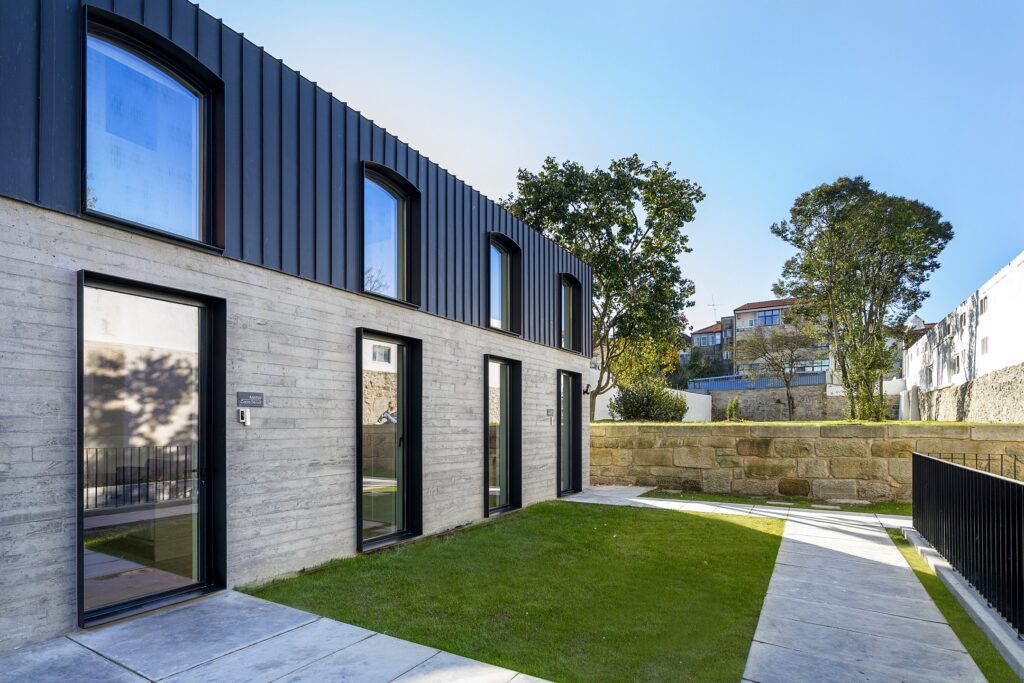
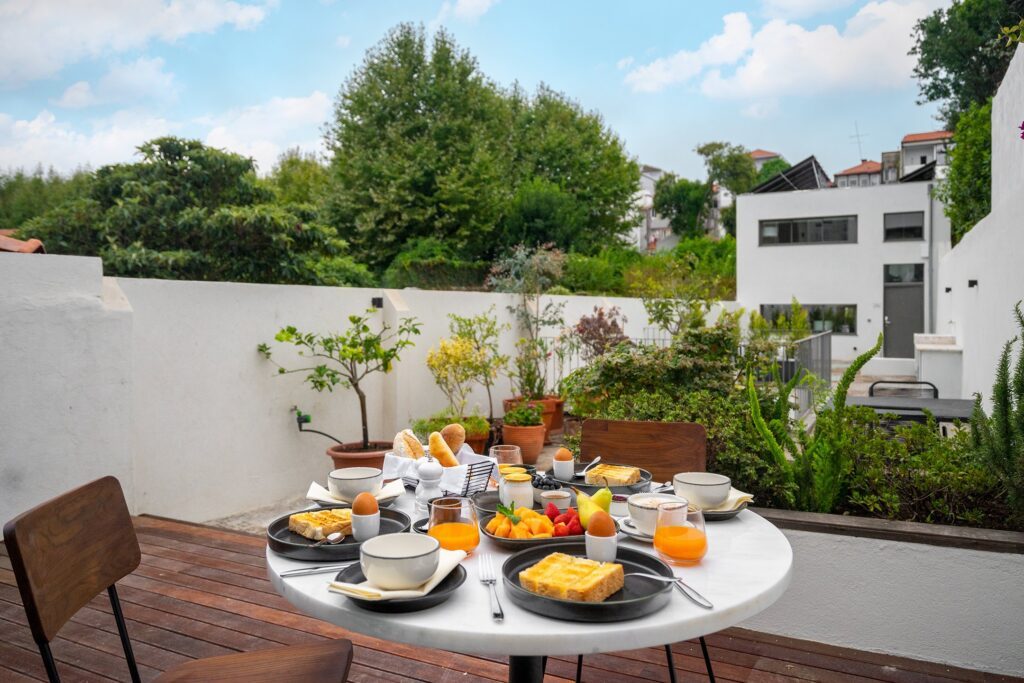
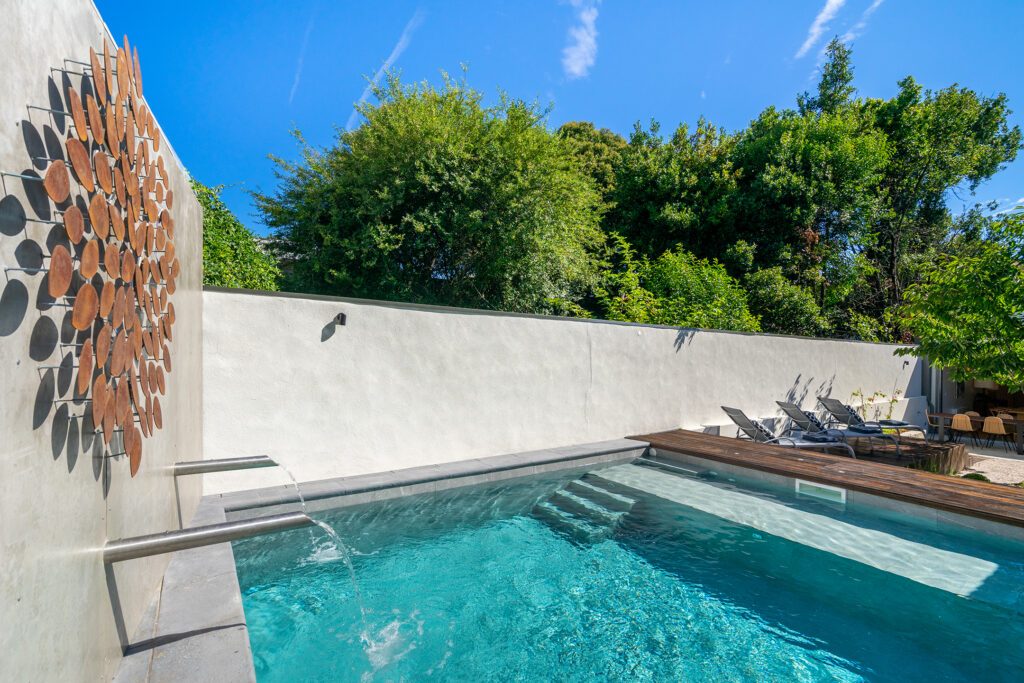
Staying nearby? Canto de Luz is about 15 minutes on foot from the cathedral, on a quiet street in Porto’s old town, with a heated outdoor pool and homemade breakfast included. From €99 a night.
Check Availability →Porto Cathedral Tickets and Entrance Fee
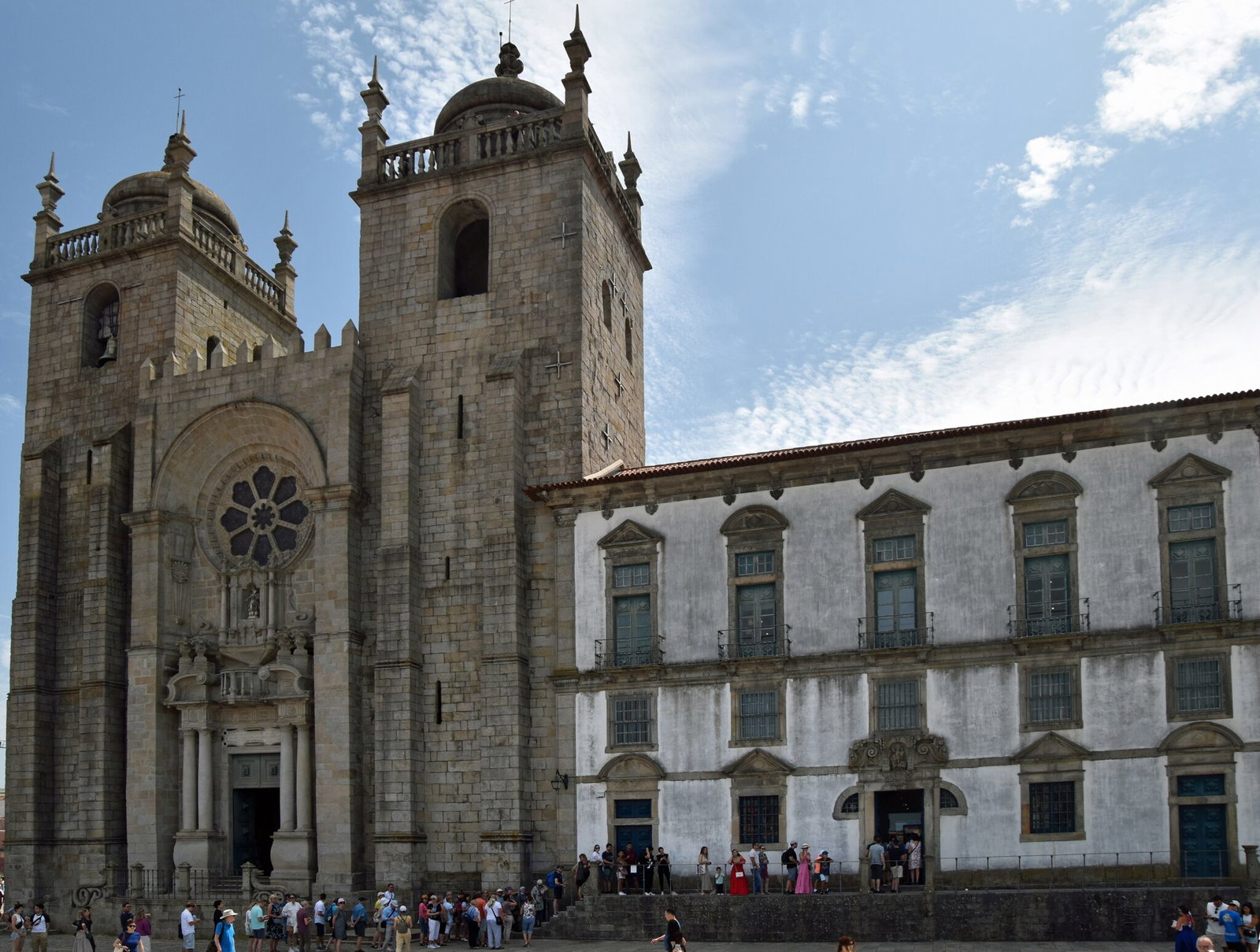
The cathedral church and the cloister are treated as two different visits. Stepping into the nave to look at the vaulting and the silver altar is the part most visitors do without a ticket. The Gothic cloister, the treasury museum and the upper gallery are the ticketed part, and they are the reason to go rather than an add-on.
The last published entrance fee was €3, with a €6 combined ticket that also covers the Bishop’s Palace next door. That figure was last updated in early 2024 and the cathedral does not publish prices on its own website, so treat it as a guide rather than a promise. If the exact cost matters for your budget, the cathedral answers the phone on +351 222 059 028.
What The Ticket Covers
- The Gothic cloister and its azulejo panels
- The upper gallery, reached by the Nasoni staircase
- The chapter house with its painted ceiling
- The treasury museum
- The terrace looking out over the Douro
Porto Cathedral Opening Hours and Mass Times
Opening hours come straight from the Diocese of Porto and change with the season rather than the day of the week. The church, the museum and the cloister all keep the same schedule.
| Hours | Notes | |
|---|---|---|
| Summer | 09:00 – 18:30 | Church, museum and cloister |
| Winter | 09:00 – 17:30 | Church, museum and cloister |
| Mass | 11:00 | Sundays and weekdays |
| Closed | Christmas and Easter | Check locally around other feast days |
Nine in the morning is the hour worth setting an alarm for. Coach groups tend to reach the Sé late morning after doing the riverside first, so the first hour is the one where you can stand in the cloister and hear nothing but your own footsteps. If you would rather see it lit, the last ninety minutes before closing put low sun through the tile panels on the north side.
Mass at 11:00 does not close the building. Visitors are asked to stay at the back and keep quiet while the service runs, and the cloister stays open throughout, so an 11:00 arrival is workable if you start with the tiles and see the nave afterwards.
The History of Porto Cathedral: How Old the Sé Really Is
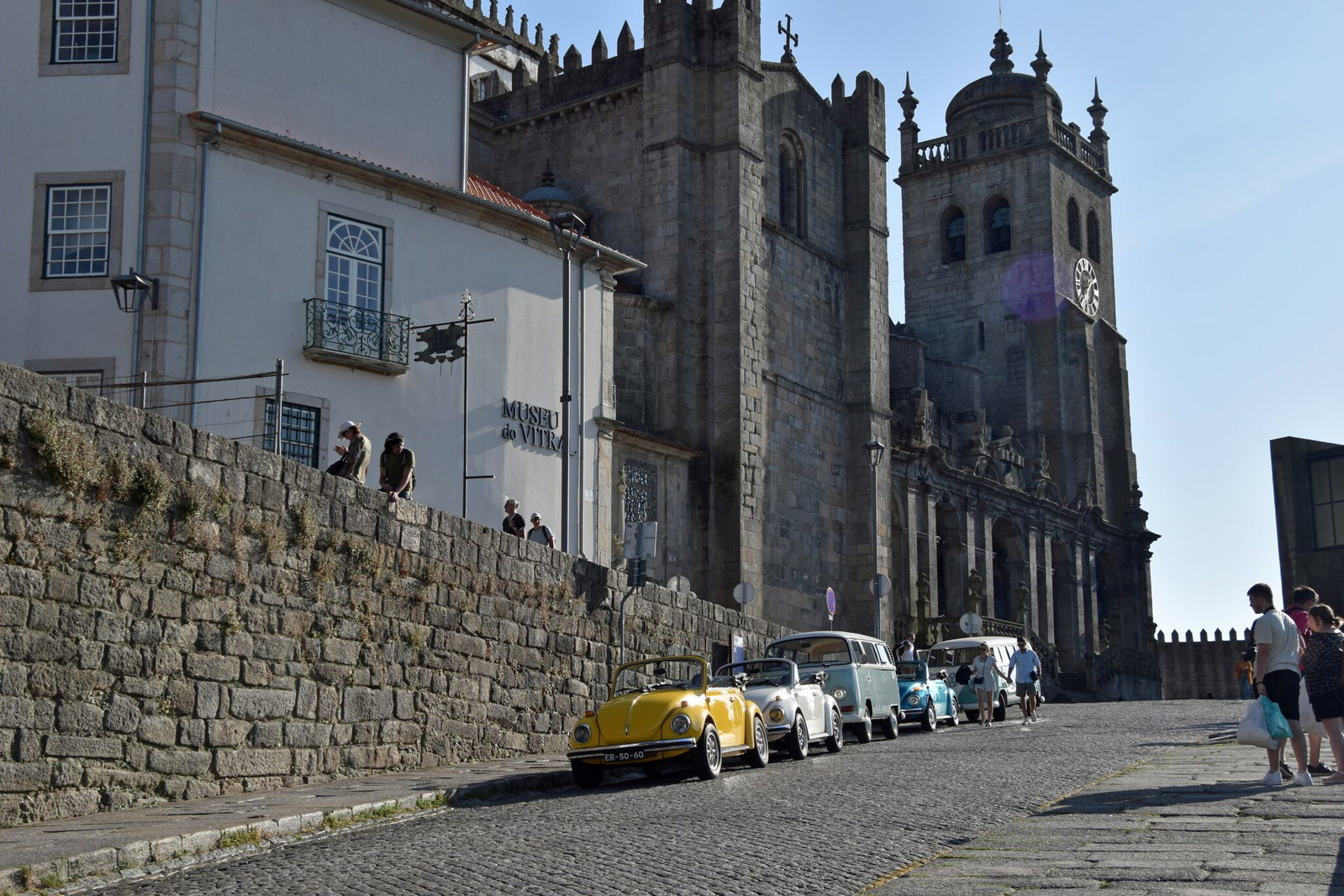
The short answer is roughly 850 years for the building you can walk into, and a little older for the site. It has been rebuilt, re-fronted and re-decorated so many times that the Sé reads as four buildings wearing each other’s clothes.
1. Romanesque Beginnings in the 12th Century
A chapel stood here first, founded by Henry of Burgundy and his wife Teresa in 1108. It was still standing in 1147, which means work on the present cathedral started in the second half of the 12th century and carried on, slowly, into the 16th. That long build is why the front looks defensive: battlements, thick walls, narrow openings and a rose window set under a crenellated arch.
The nave from this period is narrow and covered by a barrel vault, with two lower aisles either side. The stone roof over the central aisle is carried on flying buttresses, and Porto Cathedral was among the first buildings in Portugal to use them. It is a genuinely early piece of engineering, and you can see the thrust being handled in the thickness of the piers.
2. The Gothic Cloister and a Royal Wedding in 1387
Around 1333 a Gothic funerary chapel was added for João Gordo, a Knight Hospitaller who worked for King Dinis I. His tomb carries his recumbent figure and reliefs of the Apostles. The cloister followed, built across the 14th and 15th centuries during the reign of King John I.
John I married Philippa of Lancaster in this cathedral in 1387, which is the detail most British and Irish visitors stop at. The marriage sealed the Anglo-Portuguese alliance, and their children became the generation that launched Portugal’s voyages. Standing in a cloister built under the king who married an English princess here is a better reason to buy the ticket than any amount of architectural vocabulary.
3. Baroque Additions and Nasoni’s Loggia
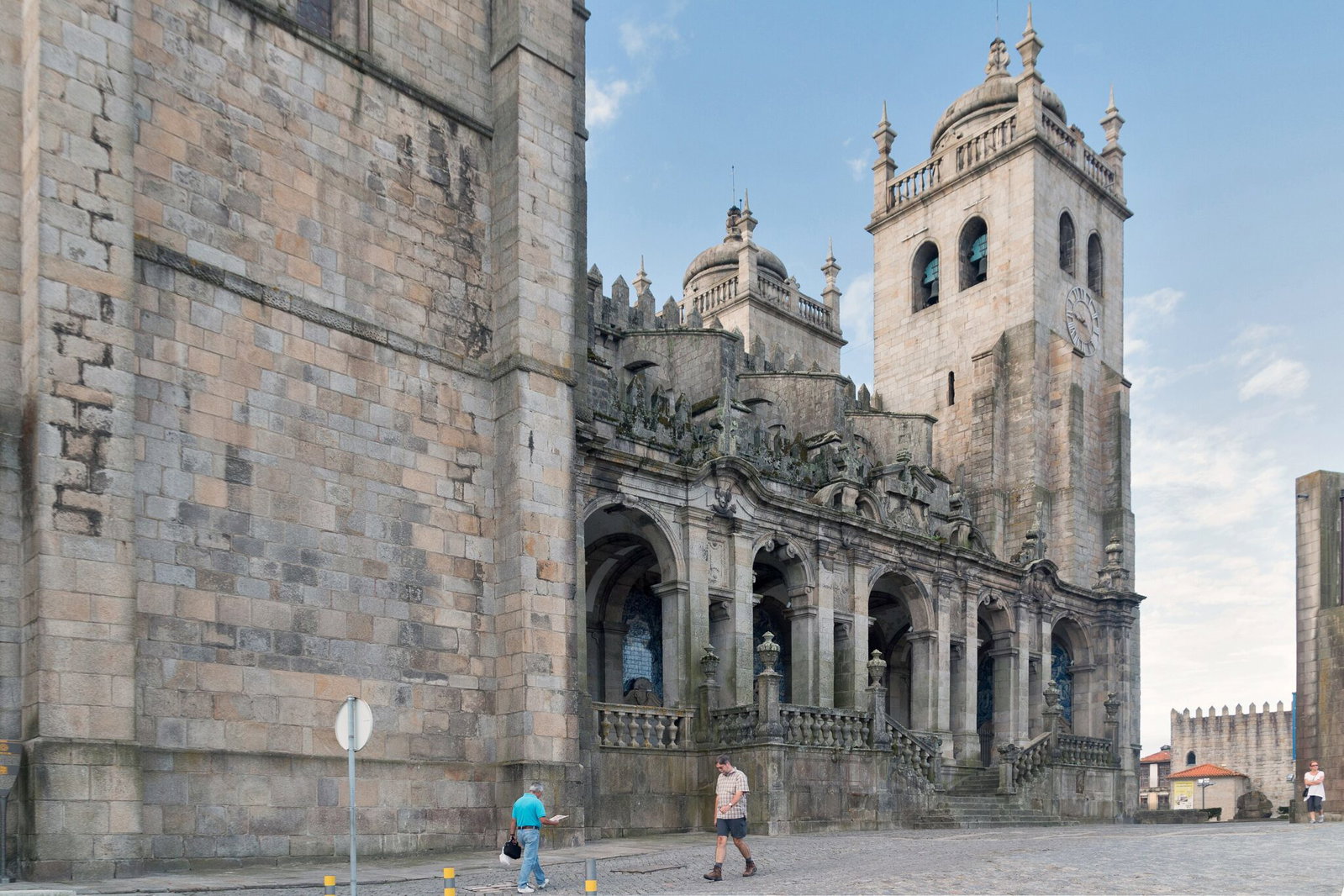
The 18th century softened the outside considerably. In 1736 the Italian architect Nicolau Nasoni added the loggia along the lateral façade, the curved balcony arrangement you see from the square. In 1772 a new main portal replaced the original Romanesque doorway and the cupolas on the towers were reworked.
Inside, the chancel was rebuilt in Mannerist style in 1610 and given a gilded woodwork retable in the second quarter of the 18th century, considered a key piece of Joanine Baroque. Nasoni painted the walls around it. Two pipe organs sit above the chapter stalls, the left one 17th century and the right one 19th.
4. The 20th-Century Restoration
The whole monument went through heavy restoration during the 1930s, when a good deal of surrounding housing was cleared to open up the Terreiro da Sé. That clearance is why the cathedral now stands on a broad stone platform rather than being pressed in by streets, and it is the reason the view from beside it is as open as it is.
Inside Porto Cathedral: What to See
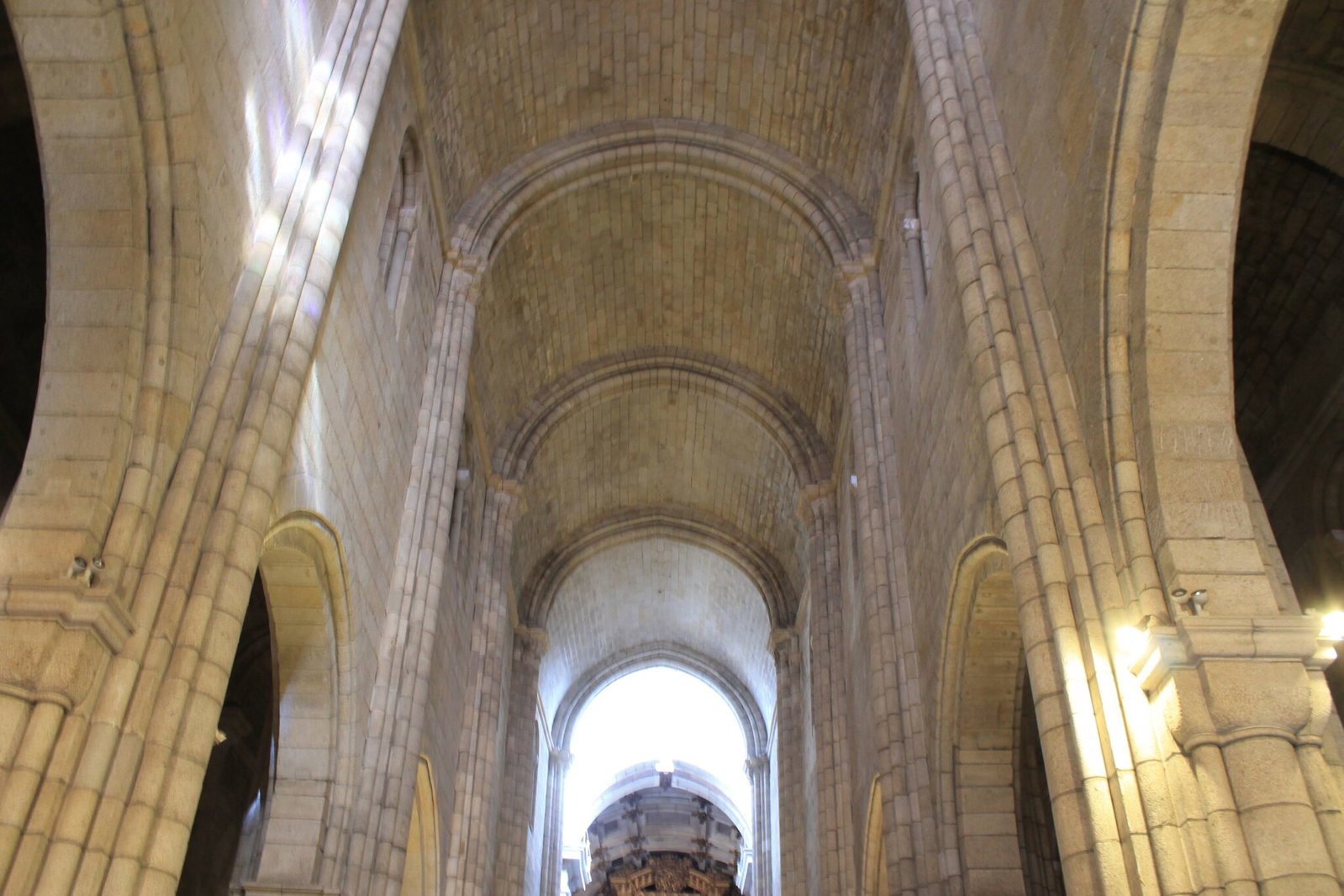
The interior is darker and plainer than the gilded Portuguese churches most visitors have already seen by this point in a trip. That contrast is the point. The nave still reads as a fortified church, and the decoration is concentrated in a few places rather than spread over every surface.
1. The Romanesque Rose Window
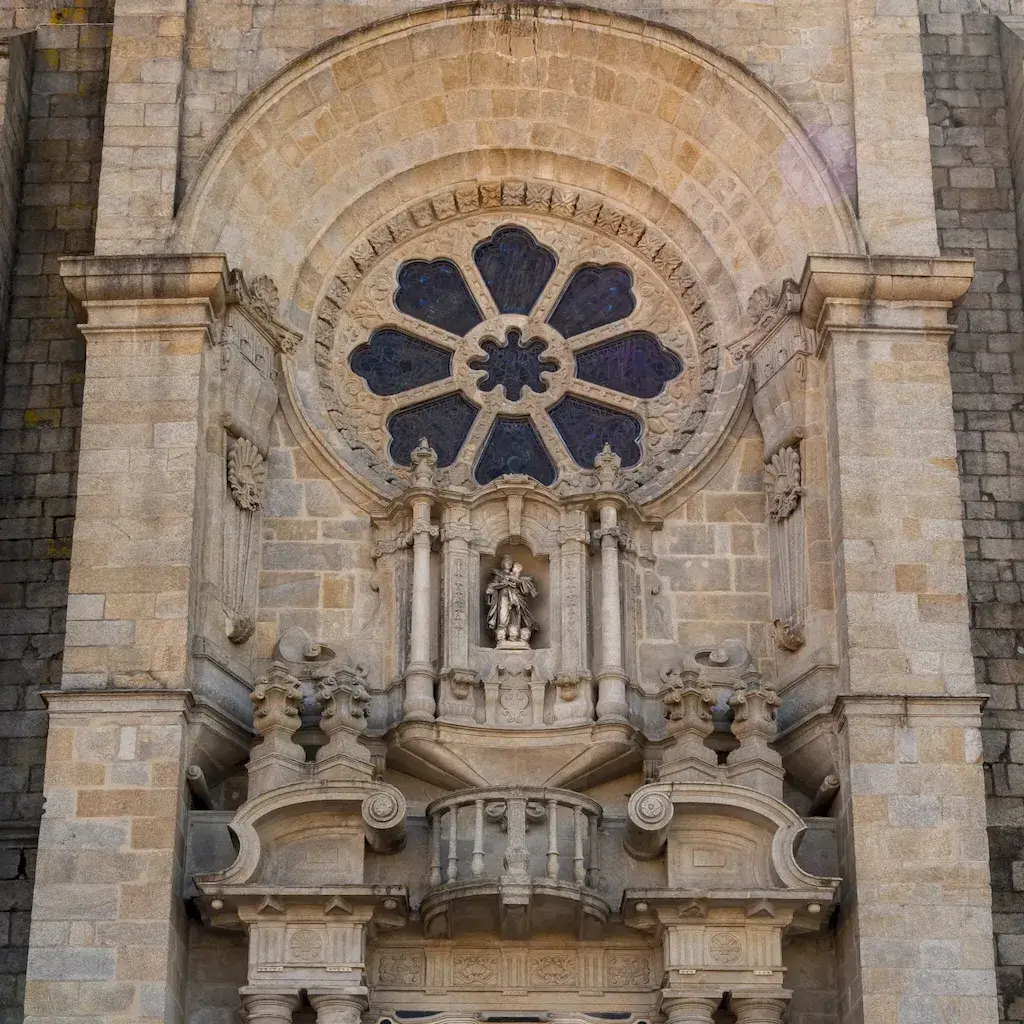
The rose window dates from the 12th century and is the best-preserved Romanesque element on the front. From the square you see it framed by the crenellated arch above Nasoni’s later portal, which is an odd pairing of two centuries in one glance. From inside, late afternoon is when it does its work.
2. The Silver Altar in the Chapel of the Blessed Sacrament
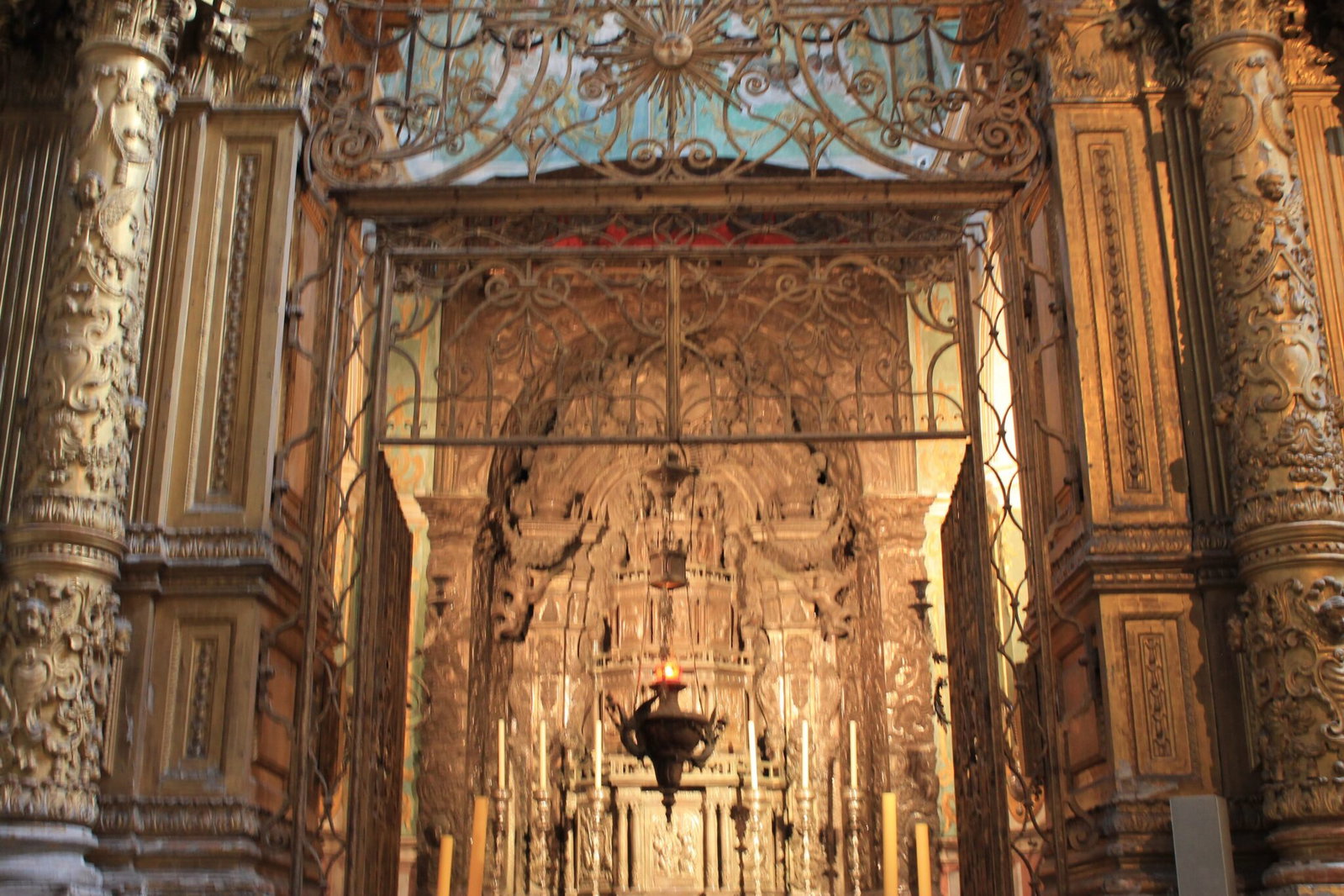
The silver altarpiece in the Chapel of the Blessed Sacrament was worked on from 1632 into the 19th century and is regarded as a fundamental piece of Portuguese silverwork, with a broad biblical iconography centred on the Eucharist. It sits behind an ironwork grille, so photographs of it are always partly a picture of the grille.
Local accounts hold that a layer of plaster was put over the silver during the Napoleonic period to keep French troops from stripping it. Whether or not that is exactly how it happened, the altar survived when a great many did not.
3. The Two Enthroned Images
In the left transept, since 1984, sits the image of Nossa Senhora da Vandoma, the city’s patron and the figure that appears on Porto’s coat of arms. In the right transept is Nossa Senhora da Silva, from the 15th or 16th century. Near the 17th-century baptismal font there is a bas-relief by Teixeira Lopes the elder, and the monumental holy water basins by the doors are late 17th century.
Stay in Porto’s old town with me
Canto de Luz is a restored boutique maison on Rua do Almada, about fifteen minutes downhill from the cathedral, with a heated outdoor pool open year round and a daily-changing homemade breakfast. From €99 a night.
The Porto Cathedral Cloister and Its Azulejos
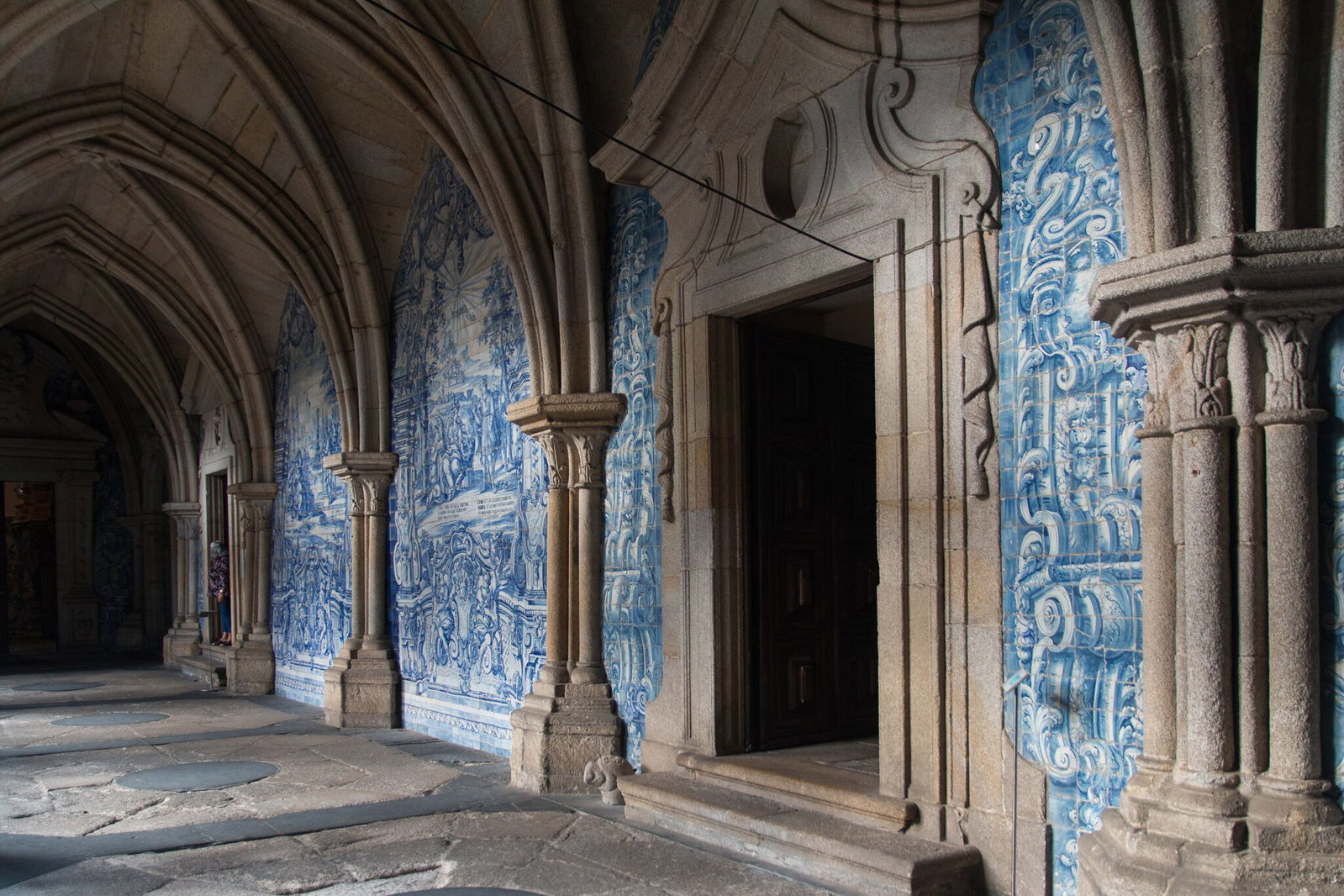
This is the part people remember. The cloister was built across the 14th and 15th centuries, and in the 18th century its walls were covered with blue and white azulejo panels by Valéntim de Almeida, worked up from drawings after Ovid’s Metamorphoses and the Song of Songs. Gothic stone arcading below, tiled narrative above, an open courtyard in the middle with a stone cross.
The effect is quieter than the tile work at São Bento station or the church fronts around the old town, because you are looking at it in a walled square with no traffic. If tiles are the reason you came to Porto, this belongs on the same list as the other azulejo sites across the city, and it is the one you are most likely to have to yourself.
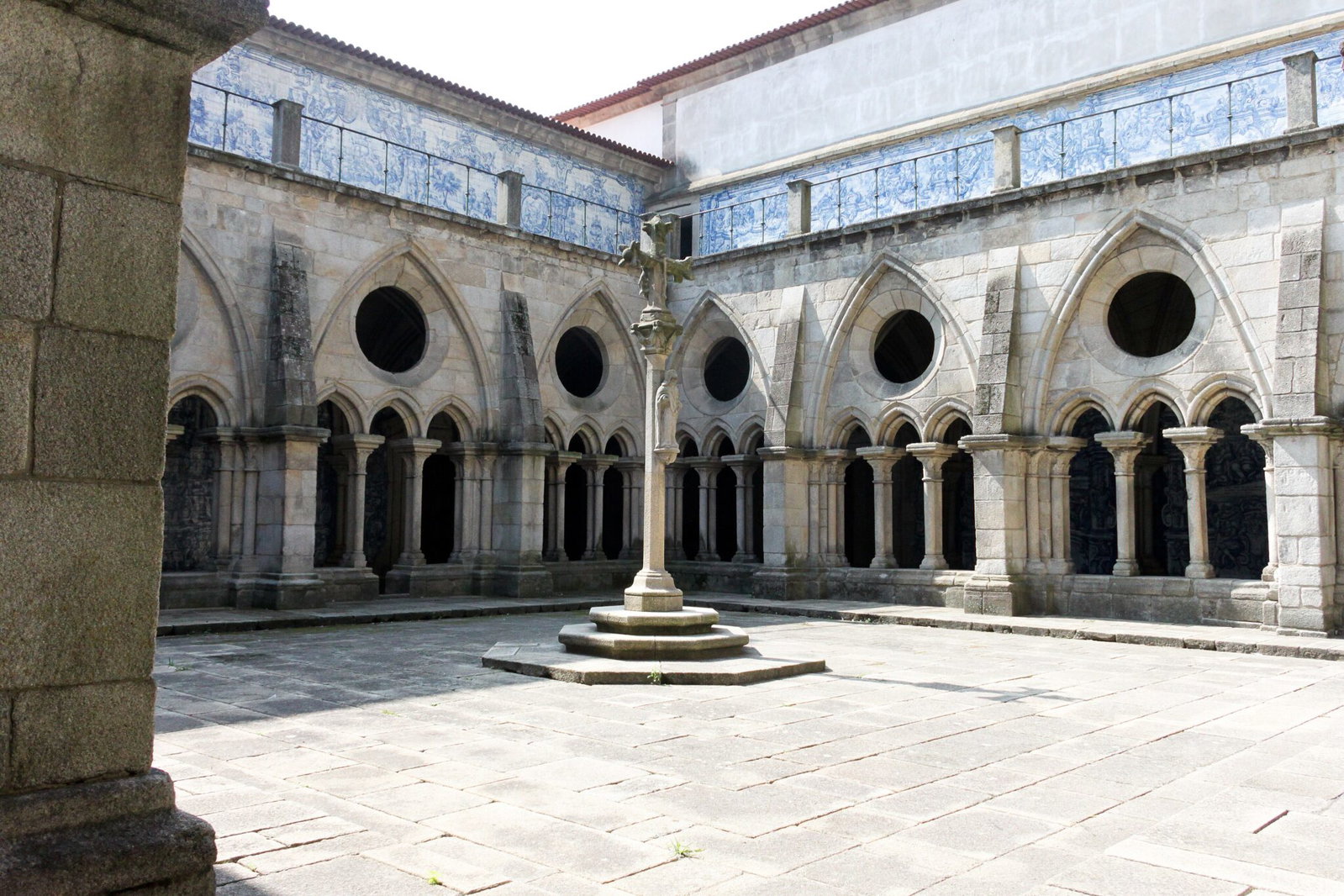
A staircase by Nasoni leads from the cloister up to the chapter house, where the painted ceiling and the view down into the courtyard are both worth the climb. The upper gallery also brings you level with the tile panels, which is the only way to read the upper rows properly.

A Note from Susan
"I send guests up to the Sé first thing, before the coaches arrive, and I always tell them to pay for the cloister rather than just putting their head round the church door. The tiles are fabulous and hardly anyone is in there at nine in the morning. Then walk down through the old streets to the river for coffee, which is much kinder on the legs than doing it the other way round."
— Susan, Founder of Espais Roca
The Porto Cathedral Viewpoint and Terrace View
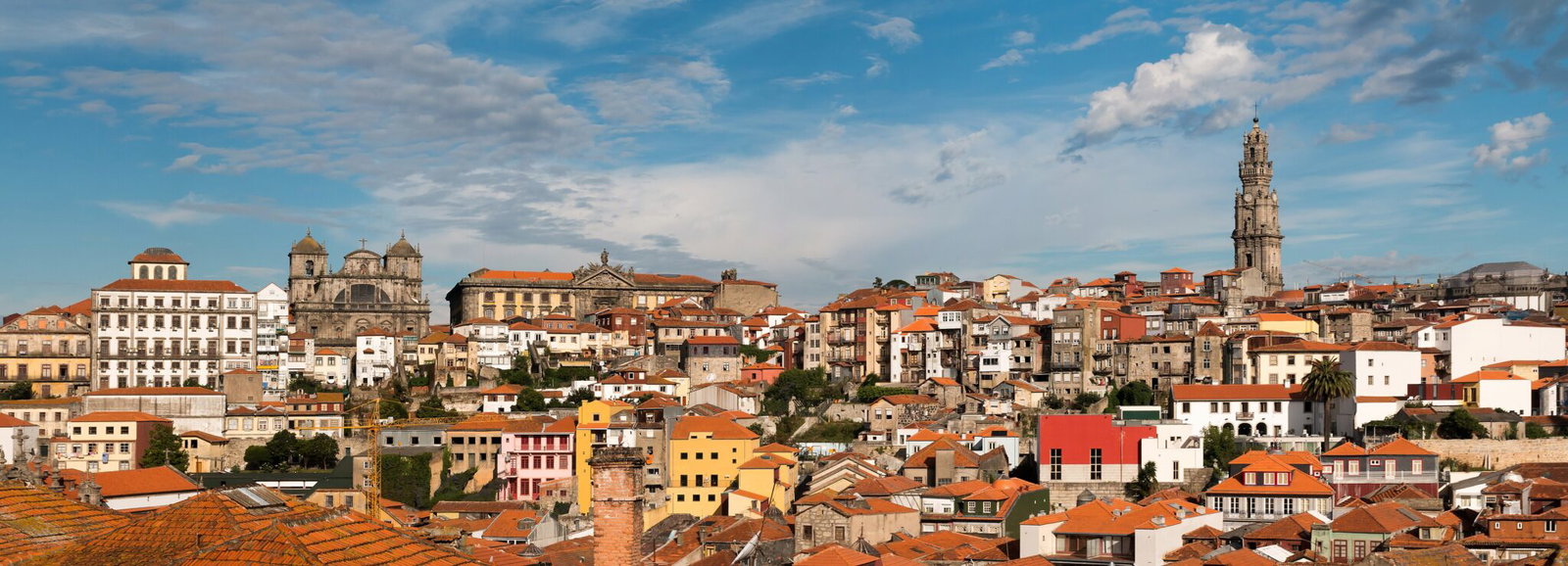
The Terreiro da Sé, the broad stone square in front of the cathedral, is free to walk onto and gives one of the best open views in the city. Rooftops drop away below you in overlapping terracotta, the Clérigos Tower stands up on the skyline, and on a clear afternoon you can see across the Douro to Vila Nova de Gaia.
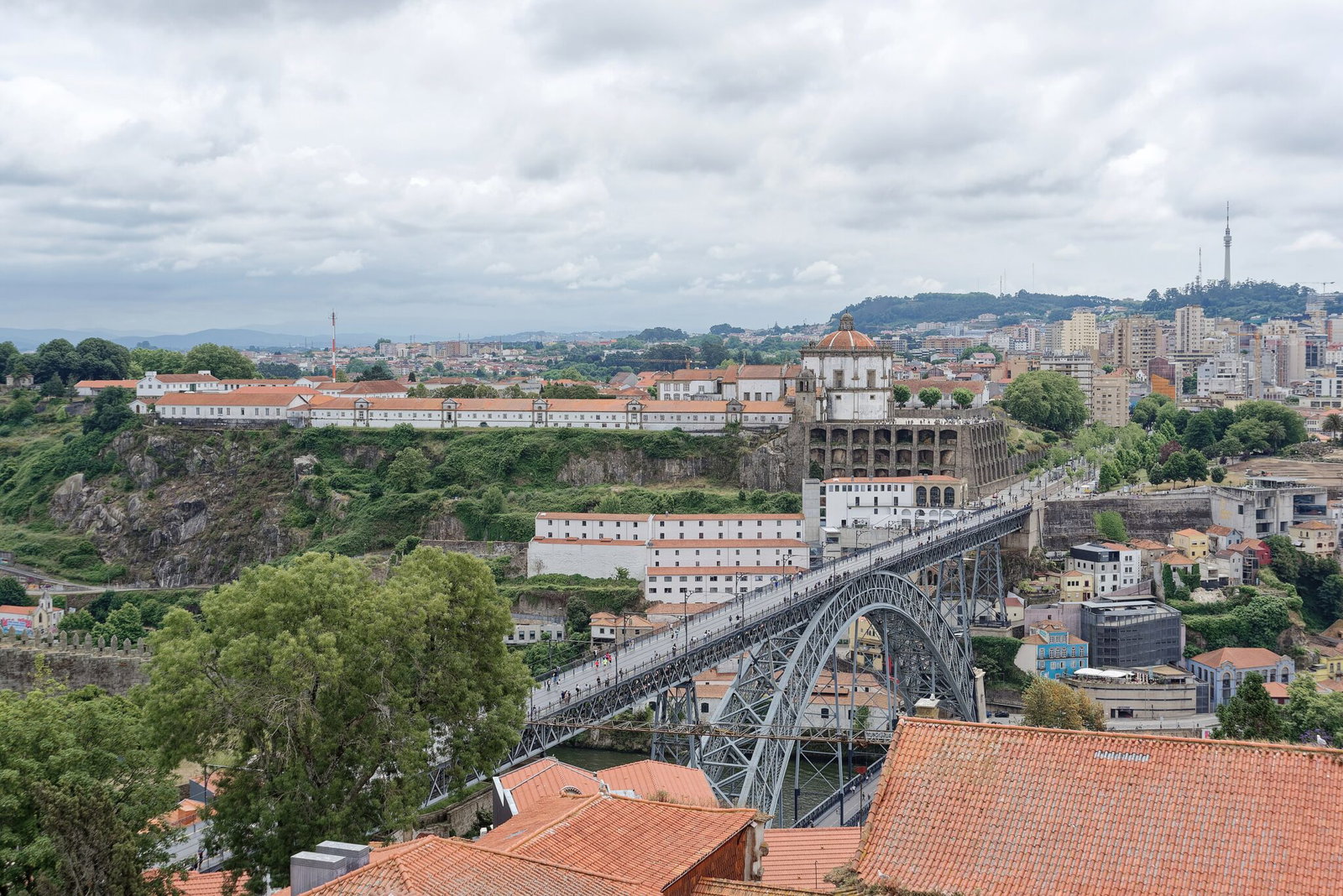
From the eastern edge you get the Dom Luís I bridge and the Serra do Pilar monastery on the far bank. Sunset is the busy hour and the square gets crowded with people waiting for it. Mid-morning is emptier and the light is actually better on the bridge, which faces you rather than backlighting.
The pillory in the square, a twisted stone column, is a 1940s reconstruction rather than the medieval original, which is worth knowing before you photograph it as an ancient object.

“Absolutely amazing fabulous. The area is great near local restaurants on a lovely quiet street with trinidade metro 5 minutes walk. Easy walk or metro to all the sights and lovely and peaceful after a day of sightseeing. The rooms are fantastic. The staff are brilliant so helpful but also unobtrusive. Breakfast is so so good. Fresh homemade and so tasty. We will definitely be back. Thanks for everything.”
— Jane Murphy, via Google
Porto Cathedral and the Camino Portugués
The Central Route of the Camino Portugués is traditionally walked from the Sé, which makes this square the last quiet moment before roughly 240 kilometres north to Santiago de Compostela. Pilgrims collect their first stamp here before setting off, and you will often see people with packs sorting themselves out on the steps early in the morning.
Even if you have no intention of walking any of it, the detail changes how the building reads. The Sé was never only a city church. It was a departure point, and the scallop shells set into the paving on the way out of the square are there to be followed.
How to Get to Sé do Porto
The cathedral stands at Terreiro da Sé, 4050-573 Porto, on top of the hill above the river. Everything about reaching it comes down to which side of the climb you want to be on.
| From | How | Time |
|---|---|---|
| São Bento station | Walk uphill | 5 minutes |
| Ribeira waterfront | Walk up through the old streets | 10 to 15 minutes, steep |
| Trindade metro | Metro to São Bento, then walk | 10 minutes |
| Canto de Luz | Walk, downhill most of the way | About 15 minutes |
São Bento is the easiest arrival. Come out of the station, turn uphill, and you are at the cathedral in five minutes. If you are coming from further out, the metro to São Bento is straightforward and the Porto metro map is worth a look before you set off, because the line letters matter more than the station names when you are working out changes.
Coming up from the river is the pretty way and the hard way. The streets are narrow, cobbled and steep, and in July that climb is genuinely warm. Doing it in reverse, cathedral first and river afterwards, is the version most guests come back and thank us for.
Where to Stay Near Porto Cathedral
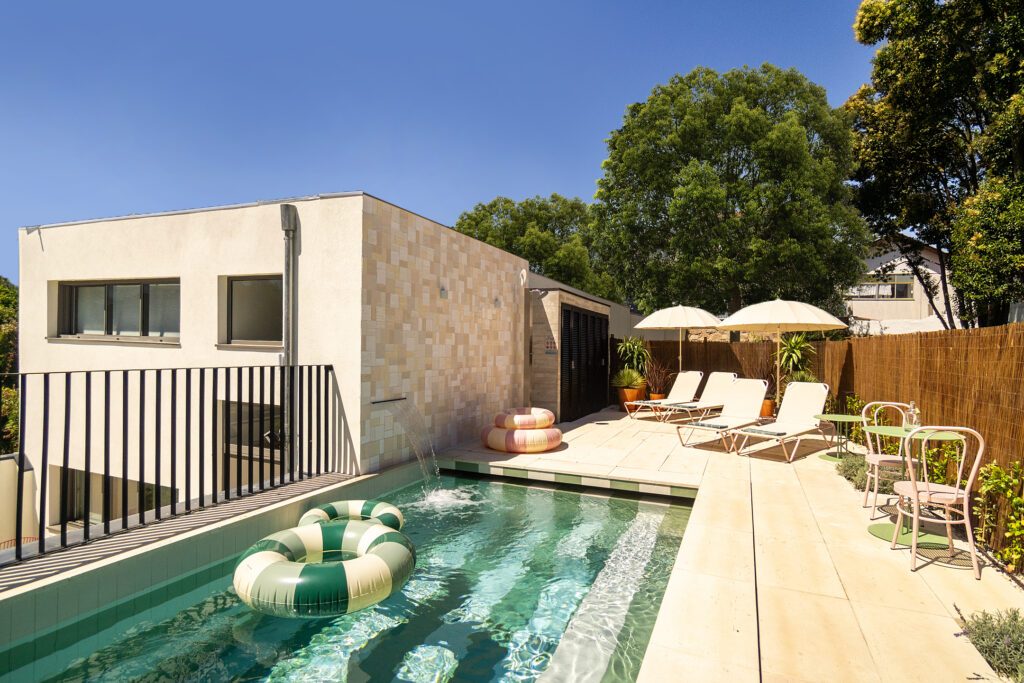
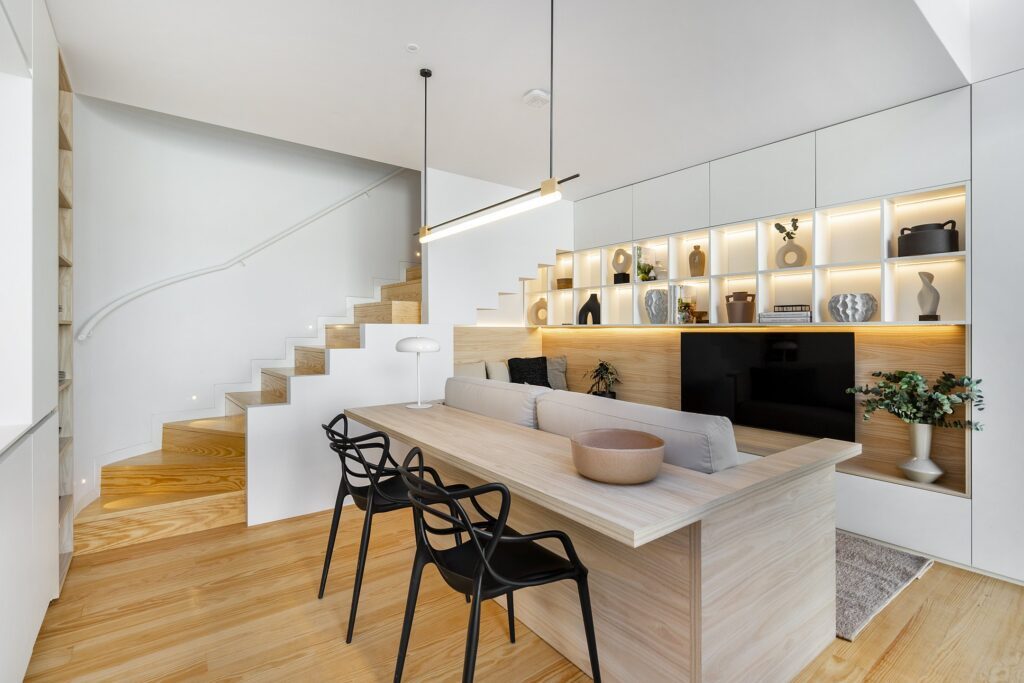
Canto de Luz is on Rua do Almada, about fifteen minutes on foot from the Sé and downhill in that direction, which matters more than the distance does. It is a restored boutique maison with seven suite types, a heated outdoor saltwater pool open all year from 09:30 to 19:30, and a homemade breakfast that changes daily and is included in the rate. Rooms start at €99 a night.
The street is quiet, which is not a given this close to the centre, and Trindade metro is a few minutes away for the airport run. If you are building a longer trip around it, our Porto itinerary for two, three or four days puts the cathedral on the first morning, while your legs are still fresh.
Frequently Asked Questions
Is Porto Cathedral Worth Visiting?
Yes, mainly for the 14th-century cloister rather than the church itself. The cloister walls carry 18th-century azulejo panels by Valéntim de Almeida and take about 40 minutes to see properly. The Terreiro da Sé outside is free and gives one of the best open views in Porto.
Is Porto Cathedral Free?
The square outside is free and so is stepping into the church to look at the nave. The cloister, chapter house and treasury museum are the ticketed part, last published at around €3. Prices are not listed on the cathedral’s own site, so confirm at the desk.
How Old Is Porto Cathedral?
Around 850 years old. A chapel stood on the site from 1108, and construction of the present cathedral began in the second half of the 12th century, continuing into the 16th. Major Baroque work followed in the 18th century and a heavy restoration in the 1930s.
Is There a Dress Code for Porto Cathedral?
It is a working cathedral, so shoulders and knees covered is the expectation, and hats come off inside. Nobody is measuring hemlines, but you may be asked to cover up if you arrive in beachwear, and during the 11:00 Mass visitors are asked to stay at the back and keep quiet.
How Much Are Porto Cathedral Tickets?
The last published fee was €3 for the cloister and museum, with a €6 combined ticket including the Bishop’s Palace next door. That figure dates from early 2024. The cathedral does not publish prices online, so call +351 222 059 028 if the exact cost matters.
What Are Porto Cathedral’s Opening Hours?
09:00 to 18:30 in summer and 09:00 to 17:30 in winter, for the church, museum and cloister alike. It closes at Christmas and Easter. Arriving at 09:00 means having the cloister more or less to yourself before the coach groups reach the hill.
What Time Is Mass at Porto Cathedral?
Mass is at 11:00, both on Sundays and on weekdays. The building stays open to visitors during the service, with sightseers asked to remain at the back. The cloister stays open throughout, so an 11:00 arrival still works if you start there.
Can You Go Inside the Porto Cathedral Cloister?
Yes, and it is the main reason to buy a ticket. The Gothic cloister dates from the 14th and 15th centuries and its azulejo panels were added in the 18th. A staircase by Nicolau Nasoni leads up to the chapter house and the upper gallery, where you can read the top rows of tiles properly.
Does the Camino Portugués Start at Porto Cathedral?
The Central Route is traditionally walked from the Sé, roughly 240 kilometres to Santiago de Compostela. Pilgrims collect their first stamp at the cathedral before setting off, and scallop shells set into the paving mark the way out of the square.
Stay at Canto de Luz
A restored boutique maison on Rua do Almada in Porto’s old town, about fifteen minutes from the cathedral. Seven suite types, a heated outdoor pool open year round, and homemade breakfast included. From €99 a night.
Check AvailabilityPhotographs via Wikimedia Commons. CC BY 4.0: Thomas Dahlstrøm Nielsen, Jakub Hałun. CC BY-SA 4.0: Thomas Dahlstrøm Nielsen, John Samuel, Daniel Villafruela. CC BY-SA 3.0: Sara Silva. CC BY 2.0: bvi4092. Opening hours and contact details from the Diocese of Porto. Historical detail from Wikipedia and the Diocese of Porto.