At A Glance
Porto has become one of Europe’s most exciting cities for large-scale street art, with 8 murals in particular worth a self-guided walking tour from the old town.
- Most of the major murals appeared after 2013, when the city legalised the first official wall
- Key artists to know: Hazul, Mr Dheo, Vhils, Bordalo II, Daniel Eime, MrKas
- Easy walking tour covers the city centre murals in 90 minutes; full tour with Gaia takes a half day
- Best light for photography: morning for east-facing walls, late afternoon for west-facing
- All starting points within 15 minutes’ walk of Canto de Luz on Rua do Almada
Porto’s street art scene has been one of the most surprising things to watch over the last decade. The city used to be famously cautious about anything painted on its azulejo-tiled walls; now it has commissioned some of the most ambitious public murals in Europe. The First Free Wall programme in 2013 opened the door, and a generation of Portuguese artists — Hazul, Mr Dheo, Vhils, Bordalo II — have run through it.
What makes Porto’s murals worth seeking out is the way they sit alongside the historic city. You walk under a 17th-century church and turn the corner into a 250-square-metre wall painted by a contemporary artist. The juxtaposition is the entire point.
Below is a self-guided walking tour of the 8 most important murals to see, in roughly geographic order from the old town outwards. All starting points are within 15 minutes’ walk of Canto de Luz on Rua do Almada. Visit Porto, the city’s tourism office, has a fuller list if you want to keep going.
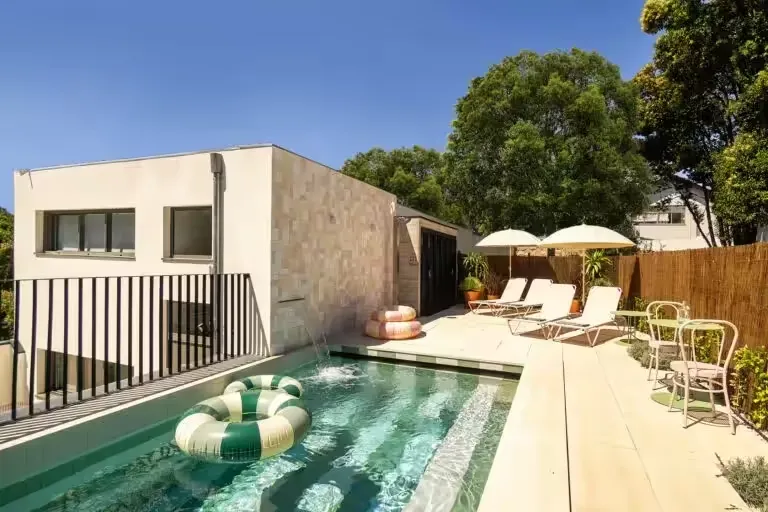
Staying in Porto? Canto de Luz is on Rua do Almada in the old town, walking distance to most of what is in this guide.
Porto’s short street-art history
Until 2013, Porto’s position on street art was conservative. Tags and graffiti were considered vandalism; the historic centre was a UNESCO World Heritage site that no one wanted to touch. The shift came that year with the First Free Wall programme, which formally commissioned and protected large-scale murals.
The first piece, Mural da Trindade, was a collaboration between Hazul Luzah and Mr Dheo on a 250-square-metre wall at the Trindade car park. It changed the conversation overnight. Within five years, dozens of major commissioned murals had appeared across Cedofeita, Bonfim, Miragaia and across the river in Gaia.
Porto’s street art is now actively managed. Galleries like Circus Network coordinate placements; the city council commissions pieces in social housing neighbourhoods to challenge stigma; international names like Vhils and Bordalo II have left signature works behind. The murals below are the ones I send guests to first.
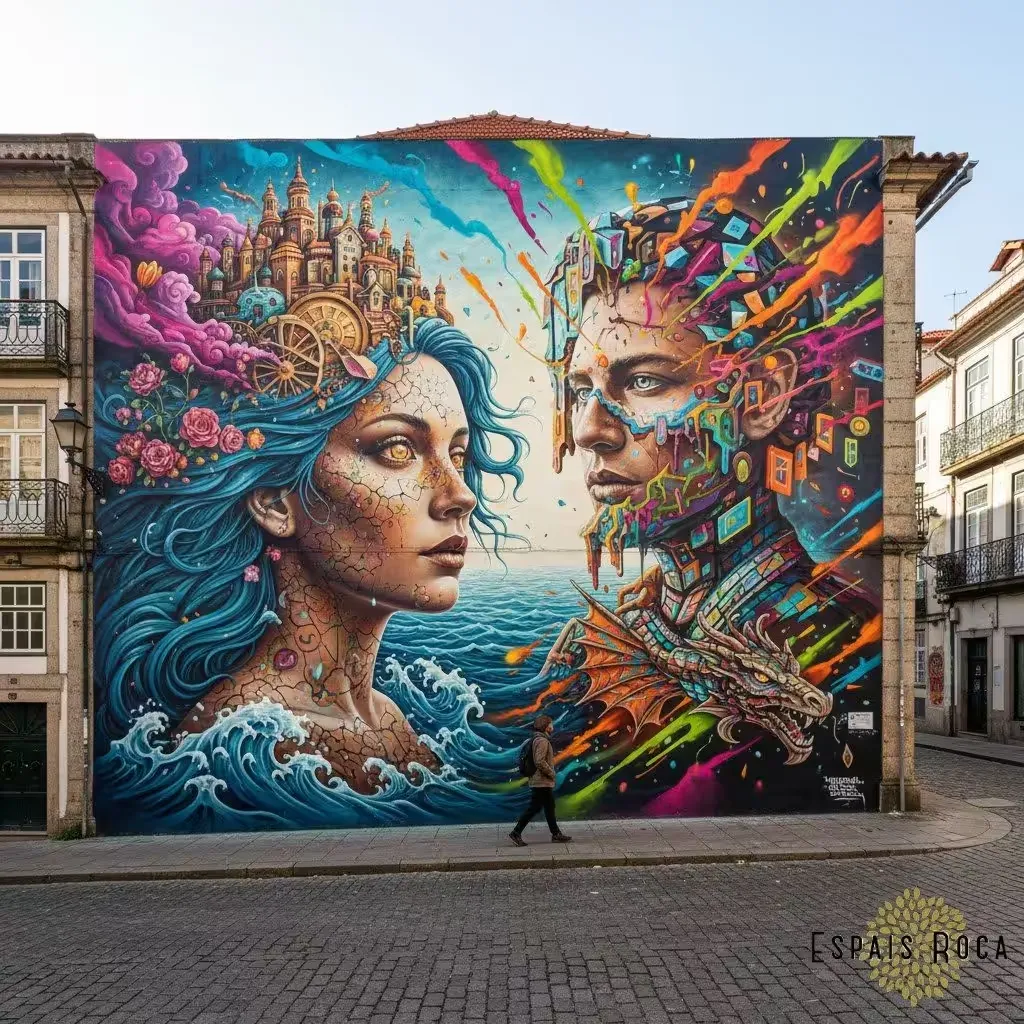
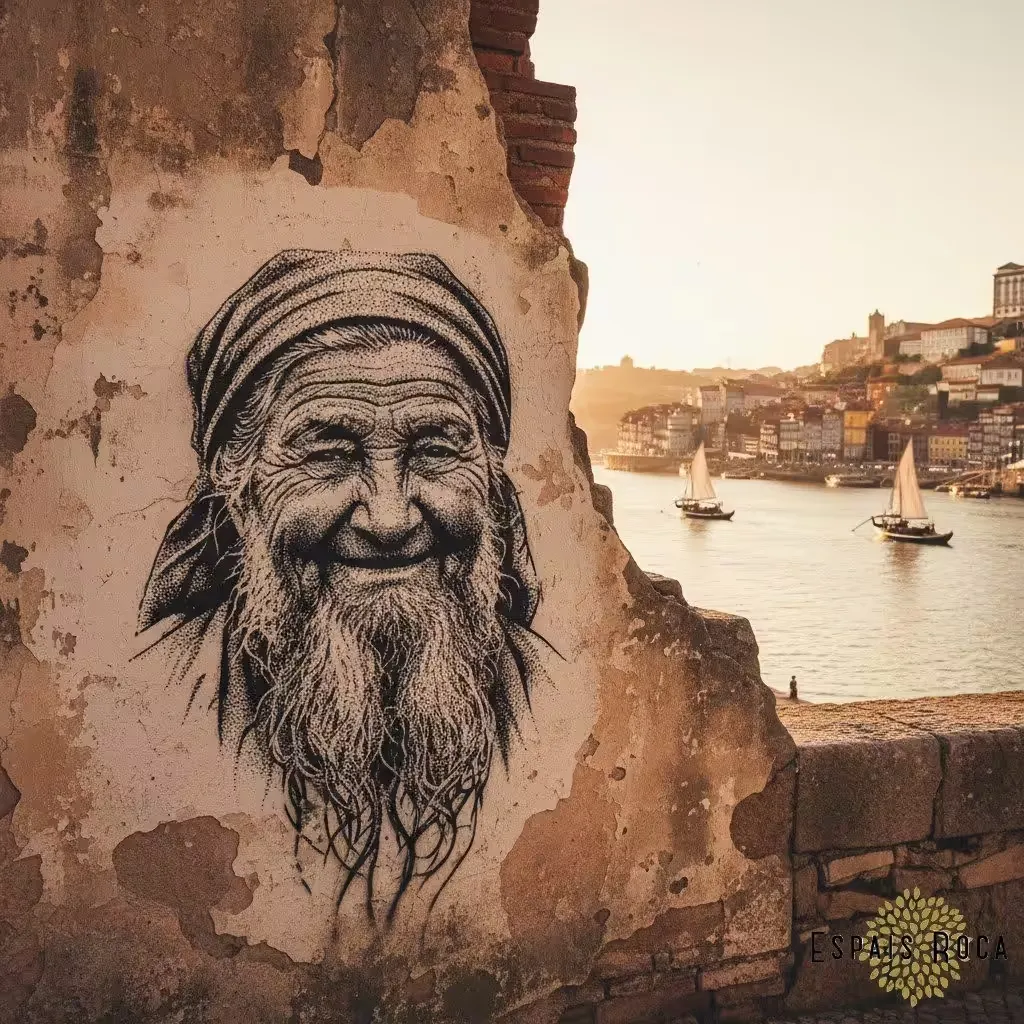
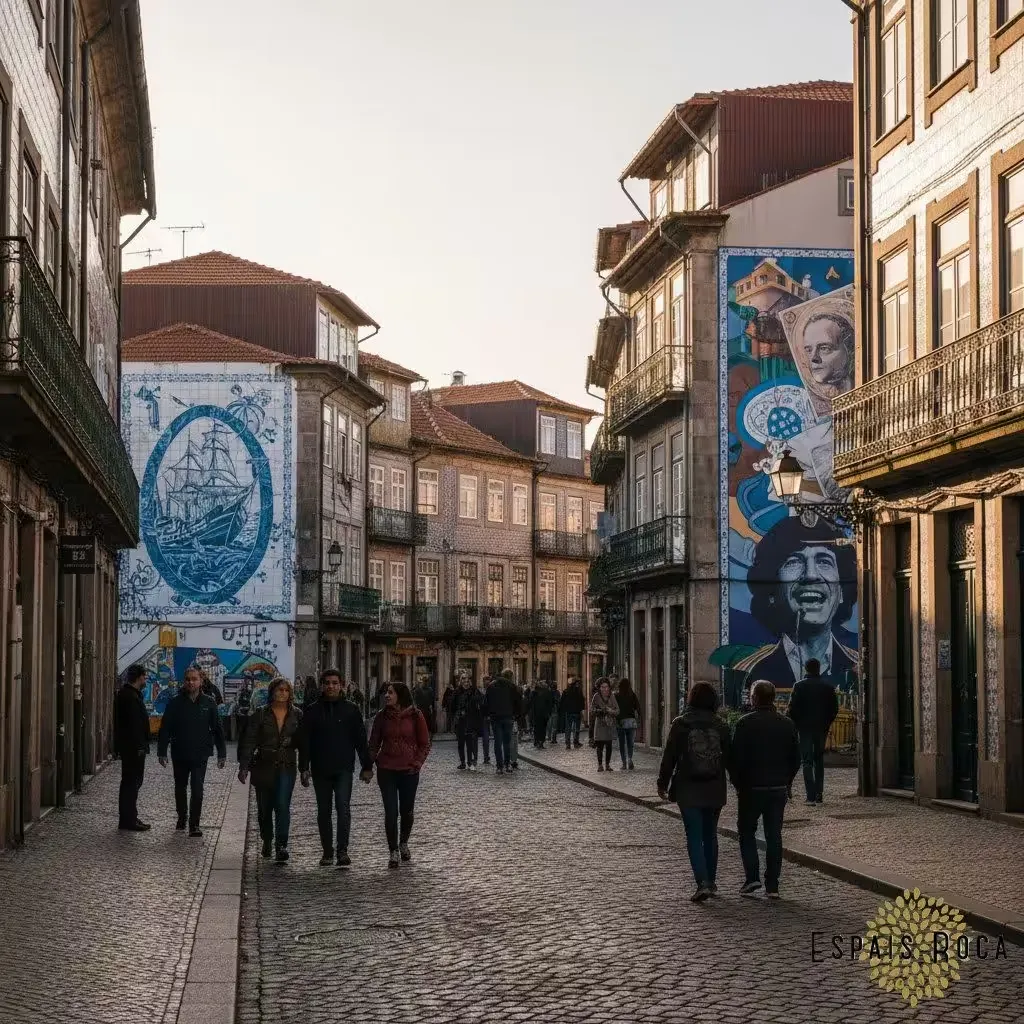
1. Mural da Trindade — Hazul Luzah and Mr Dheo (2014)
Porto’s first commissioned mural and still arguably its most important. 250 square metres on the side of Trindade car park, combining Hazul’s faceless round-eyed characters with Mr Dheo’s photo-realistic portrait of a father holding the city of Porto in his hands. The contrast between the two styles is the whole point.
- Where: Trindade car park, side wall (Praça da Trindade)
- Walk from Canto de Luz: Approximately 4 minutes
- Best light: Late morning
- Nearby: Trindade metro station, Café Majestic, Lapa church
2. Dom Quixote e Sancho Pança — Mesnk, Fedor and Mots (2013)
Porto’s first legal large-scale street art piece, predating the First Free Wall programme. 130 square metres at the end of Rua da Alegria, reimagining Cervantes’ characters with a sci-fi take on Rocinante (Don Quixote’s horse). Coordinated by Circus Network, the gallery that has shaped Porto’s street art scene from its earliest days.
- Where: End of Rua da Alegria, Porto
- Walk from Canto de Luz: Approximately 12 minutes
- Best light: Afternoon
- Nearby: Café Progresso, Igreja de Santo Ildefonso
3. Look at Porto — Vhils (2017)
Vhils, the most internationally famous Portuguese street artist, is known for carving rather than painting his portraits, chipping into the surface of a wall to reveal layers underneath. Look at Porto is one of his major Porto works: a textured, sculptural face that emerges from the stone of a building in Baixa. It is a piece you keep noticing different things in.
- Where: Baixa, central Porto (a short walk from São Bento)
- Walk from Canto de Luz: Approximately 8 minutes
- Best light: Late afternoon (the texture catches raking light beautifully)
- Nearby: São Bento station, Clerigos Tower
4. Mira — Daniel Eime (Miragaia)
A stencil portrait by Daniel Eime, one of the country’s leading stencil artists, on a building in the Miragaia district overlooking the Douro. The face is a local figure from the neighbourhood; the technique is intricate, multi-layer stencil work that gives the portrait a feeling of fading photograph. It rewards a slow look.
- Where: Miragaia district, Porto (signposted from the riverfront)
- Walk from Canto de Luz: Approximately 14 minutes
- Best light: Early morning
- Nearby: Dom Luís I bridge, Ribeira waterfront
Stay in Porto’s old town with me
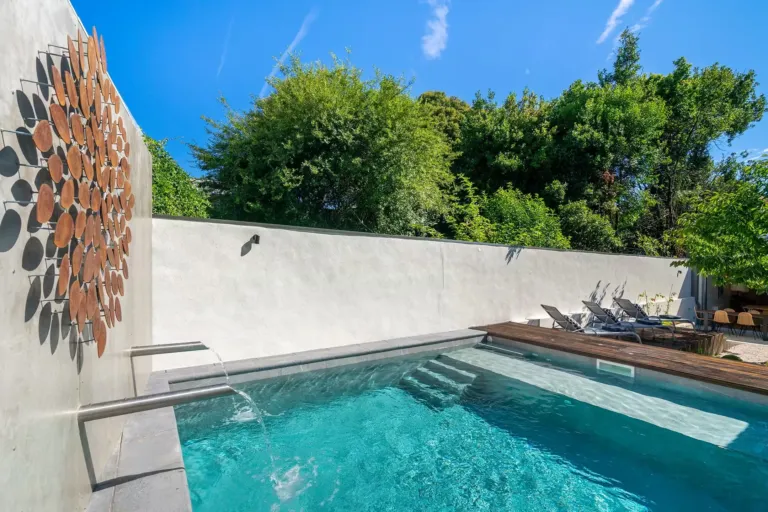
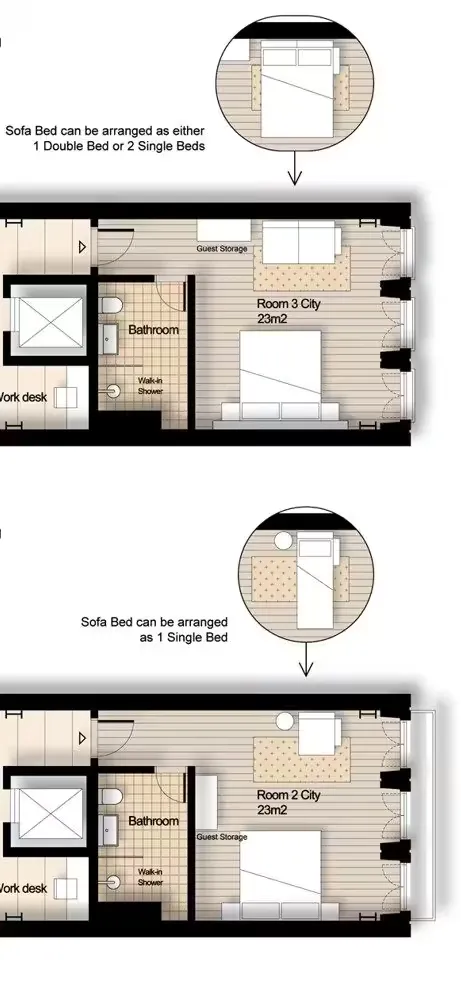
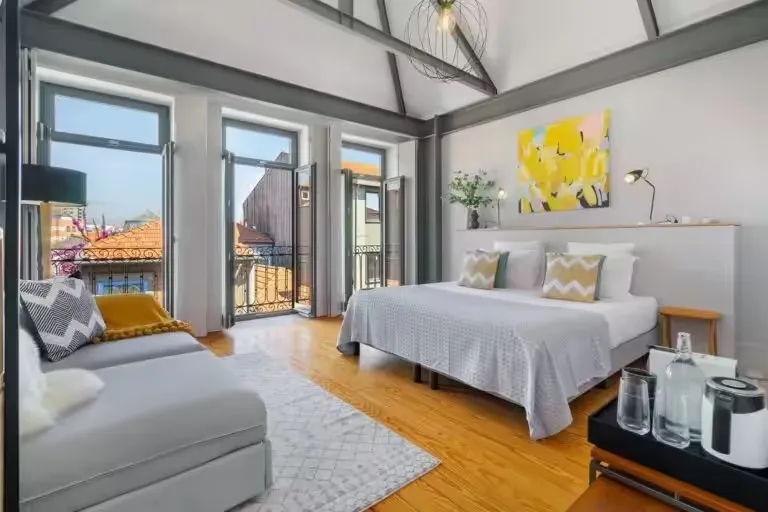
Canto de Luz is a beautifully restored boutique maison on Rua do Almada, with a heated outdoor pool, a daily-changing homemade breakfast and the Canto Cooking school on site. From €99 a night.
5. Slava Ukraini — MrKas (2022)
Painted in April 2022, this 7-by-3 metre mural shows a child gazing through a Ukraine-shaped wall, a single tear on his cheek. Crimea is deliberately included in the silhouette. It is one of the most deeply affecting pieces of recent street art in the city, and a very direct reminder of how quickly a Porto wall can become a global statement.
- Where: Alameda Capitães de Abril, near Lapa metro, Cedofeita
- Walk from Canto de Luz: Approximately 8 minutes
- Best light: Mid-morning
- Nearby: Lapa church, Mural da Trindade
6. Half Rabbit — Bordalo II (Gaia, 2017)
Bordalo II makes large-scale animal portraits out of literal rubbish — bottle tops, broken plastic, old metal — collected from the surrounding area. Half Rabbit, on Rua Guilherme Gomes Fernandes in Cais de Gaia, splits the rabbit in two: one side in vivid colour from recycled materials, the other in the grey of unsorted waste. The point is unmissable, which is what makes it work.
Across the Dom Luís I bridge from the old town. Worth crossing for.
- Where: Rua Guilherme Gomes Fernandes 42, Cais de Gaia
- Walk from Canto de Luz: Approximately 25 minutes (across the bridge)
- Best light: Mid-afternoon
- Nearby: Port wine cellars, Dom Luís I bridge views
7. Modern Religion — Mr Dheo (Bairro de Francos)
A commission from the Porto City Council to brighten up the social housing neighbourhood of Bairro de Francos. Mr Dheo’s photographic portrait style at full scale, with companion pieces by Hazul nearby in Bairro do Carvalhido. These are slightly off the standard tourist track, which is exactly why they are worth visiting.
- Where: Bairro de Francos and Bairro do Carvalhido, Porto
- Walk from Canto de Luz: Approximately 25 minutes; faster by metro to Carolina Michaelis
- Best light: Morning
- Nearby: Casa da Música
8. Freedom Fighter — Mr Dheo (Matosinhos, 2022)
Mr Dheo’s second major piece responding to the Ukrainian war: a figure draped in blue and yellow on Rua Roberto Ivens in Matosinhos, just north of Porto. Worth combining with a half-day at Matosinhos beach and a long seafood lunch — the metro runs straight there from Trindade in 20 minutes.
- Where: Rua Roberto Ivens, Matosinhos
- Walk from Canto de Luz: 20 minutes by metro then a 5-minute walk
- Best light: Late morning
- Nearby: Matosinhos beach, Matosinhos market
How to plan the walk
Three of the murals (Trindade, Slava Ukraini, Look at Porto) are within a tight cluster around Cedofeita and Baixa; you can see them in 90 minutes including coffee stops. Adding Dom Quixote and Mira makes a comfortable half day. Crossing the bridge for Half Rabbit and taking the metro to Matosinhos for Freedom Fighter pushes it into a full day.
If you want a guide rather than a self-guided walk, several local operators run street-art-specific tours starting from São Bento; Visit Porto’s tourism office can point you to the current options. For a quieter solo route, do the central cluster early on a Sunday morning when the streets are empty.

A note from Susan
“What I love about Porto’s street art is how unembarrassed it is. The murals are not hidden in galleries; they are at eye level on the way to the supermarket. The best way to see them is on foot, with no plan, the day after you arrive.”
More to explore in Porto
- museums and galleries in Porto
- free things to do in Porto
- Mercado do Bolhão
- best beaches near Porto
- day trips from Porto

“Awesome lodging in the heart of Porto. The service is 6 stars if possible. While all the staff were outstanding, Susan and Hannah were incredibly kind and helpful during our stay. I would not stay anywhere else when returning to Porto.”
— DM B (Dave), via
Frequently asked questions
Are Porto’s street art murals legal or graffiti?
The major murals listed here are all legally commissioned, either by the Porto City Council, by Circus Network gallery, or by community programmes. Smaller tags and unsanctioned pieces still appear, but the works in this guide are protected and looked after.
Can I take photos?
Yes — murals are public art and photography for personal use is welcomed. For commercial photography (weddings, fashion shoots, advertising), you may need to credit or obtain permission from the artist; Circus Network can advise.
How long does the full tour take?
The central cluster of murals (1, 3, 5) takes 90 minutes including coffee. Adding 2, 4 and 7 stretches it to a half day. A full day with Gaia (mural 6) and Matosinhos (mural 8) covers everything.
Is the tour suitable for children?
Yes; most murals are large-scale and visually striking, which children tend to enjoy. The route is mostly flat in the centre, with some hills towards Miragaia. The Slava Ukraini mural is emotionally heavy and may need a brief explanation for younger children.
When is the best time of year for street art in Porto?
Year-round; the murals do not change seasonally. Spring and autumn have the most flattering light for photography. Summer is hot but the murals are mostly on shaded streets. Winter is fine but light is short.
Are there guided street art tours in Porto?
Yes — several local operators run them, typically starting at São Bento or Trindade. They are 2–3 hours, English-language available. Visit Porto’s tourism office maintains a current list.
Stay where the food is
Canto de Luz sits on Rua do Almada in Porto’s old town, walking distance to almost everything in this guide. Heated outdoor pool, daily-changing homemade breakfast, and the Canto Cooking school on site. From €99 a night.
Check availability