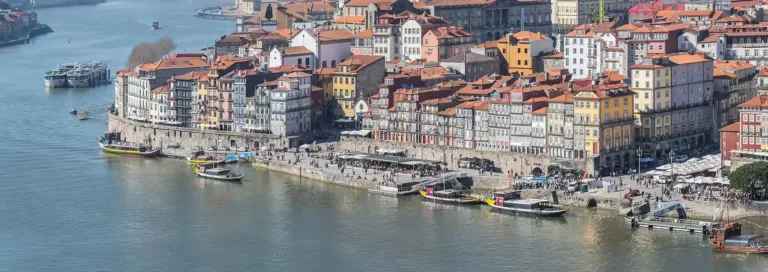
At A Glance
Porto has three historic tram lines: Line 1 along the Douro to Foz, Line 18 from Passeio Alegre up to Carmo, and the Line 22 loop through the city centre, with single tickets of about €6 bought on board.
- Tram Line 1 runs from Infante, near the Ribeira, along the river to Passeio Alegre in Foz, about every 20 minutes.
- Tram Line 18 runs between Passeio Alegre and Carmo about every 30 minutes, and returned to Carmo in July 2026.
- Tram Line 22 is a city-centre loop between Carmo and Batalha, every 30 minutes from 09:15, back in service since August 2026.
- A single tram ticket costs about €6 and two trips about €8, and the Andante Tour card is not valid on the historic trams.
- Canto de Luz is about 10 minutes on foot from the Carmo tram stop, where Lines 18 and 22 meet.
The Porto tram is one of the great small pleasures of the city: wooden tramcars from the early twentieth century, painted in cream and brown, rattling along the river and through the cobbled streets of the old town. Today the trams are run by STCP, the city transport company, on three heritage lines, and while the Porto metro does the everyday work of moving people around the city, the trams are the most charming way to see it.
Each line has a character of its own. Line 1 follows the Douro from the Ribeira waterfront to the Atlantic at Foz, Line 18 climbs from the river to the upper town, and Line 22 loops through the busy streets around Carmo, Aliados and Batalha. All three are back in full service after years of disruption from metro works, which makes 2027 the best time in a long while to ride them.
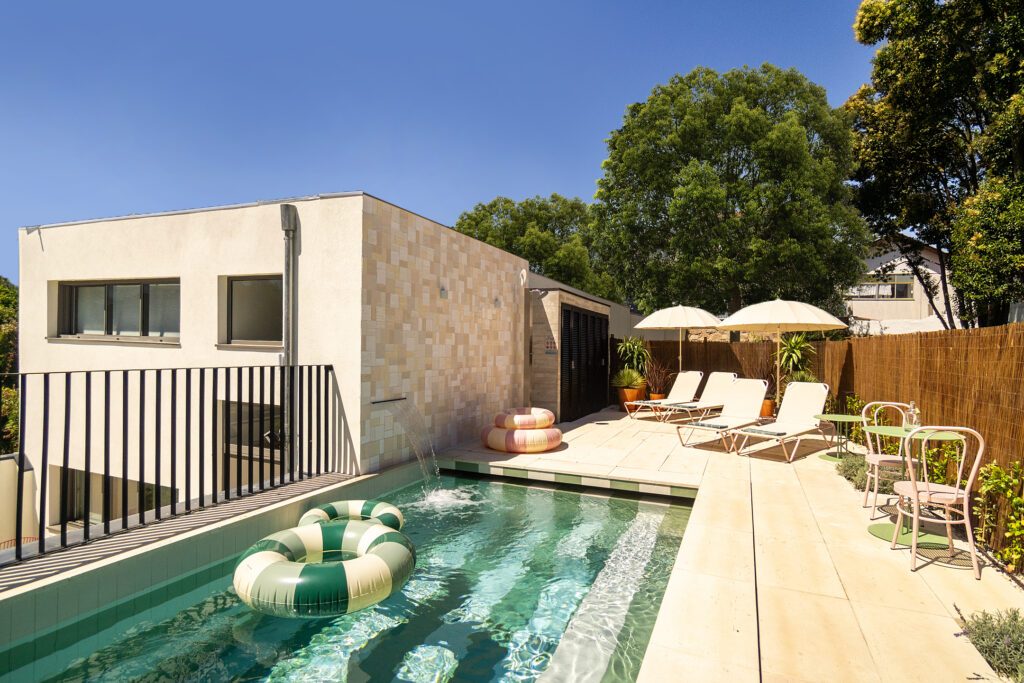
Riding the Porto trams in 2027? Check dates at Canto de Luz, our Boutique Maison a short walk from the Carmo tram stop.
Porto Trams Explained: The Three Historic Porto Tram Lines in 2027
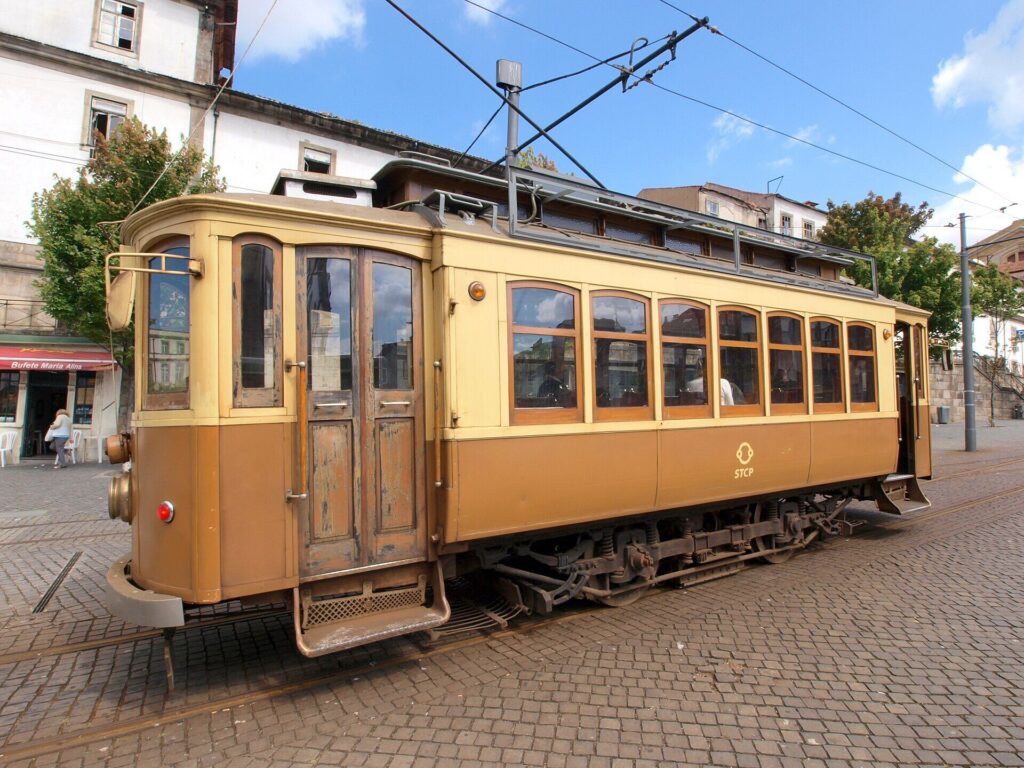
Porto was one of the first cities on the Iberian Peninsula to run electric trams, and at its peak the network covered much of the city and its suburbs. Most of the old routes were replaced by buses in the second half of the twentieth century, but three heritage lines survived, and they are now run with restored vintage tramcars, many of them nearly a hundred years old, with wooden seats, brass fittings and open platforms.
The trams are not part of the modern metro, which uses sleek light-rail trains and its own tracks. The heritage trams share the streets with cars and buses, they run at a gentle pace, and they are aimed mainly at visitors. That makes them less practical than the metro or the bus for getting somewhere quickly, but far more enjoyable when the journey itself is the point.
The three lines connect with each other, so it is easy to combine them. Lines 1 and 18 share the riverside stretch near Massarelos and both reach Passeio Alegre in Foz, while Lines 18 and 22 meet at Carmo in the upper town. With a little planning, you can ride from the Ribeira to the sea, come back up through the city on Line 18 and finish with the Line 22 loop through the centre.
Porto Tram Lines at a Glance
| Line | Route | Frequency | Best for |
|---|---|---|---|
| Tram Line 1 | Infante to Passeio Alegre, along the Douro | About every 20 minutes | The river ride to Foz |
| Tram Line 18 | Passeio Alegre to Carmo | About every 30 minutes | Climbing from the river to the upper town |
| Tram Line 22 | Carmo to Batalha city-centre loop | Every 30 minutes, from 09:15 | A short ride through the centre |
Frequencies are the typical service levels published for the lines, and timetables change between summer and winter, with longer hours in the busy months. Check the STCP timetable or the stop on the day, especially if you are planning an early morning or late afternoon ride.
Porto Tram Line 1: The Riverside Tram from Infante to Foz do Douro
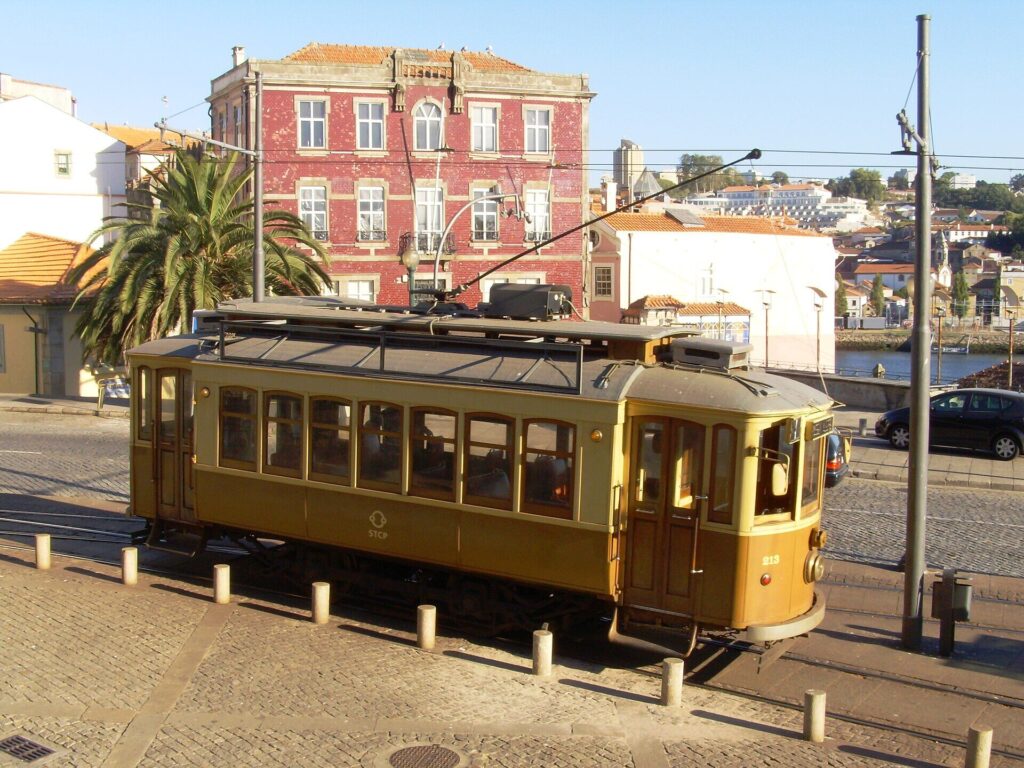
Tram Line 1 is the most famous tram ride in Porto and one of the most beautiful in Europe. It starts at Infante, by the riverside below the São Francisco church at the western end of the Ribeira, and follows the Douro all the way to the Atlantic, finishing at the Jardim do Passeio Alegre in Foz do Douro. For most of the journey the river is just outside the window.
Along the way the tram passes the old customs house, the Alfândega, the Massarelos riverside where the tram museum stands, and the great concrete arch of the Arrábida bridge, before running past the fishermen's quarter of Cantareira to the sea. The trams on this line are small and quickly fill with passengers, so the views come with a real sense of the old city.
Line 1 runs about every 20 minutes through the day, and the journey from Infante to Passeio Alegre takes around half an hour, depending on traffic. Unlike Line 22, it is not a loop, so you need a ticket for each direction if you plan to come back by tram, or you can return on the 500 bus, which follows the same coast road.
Porto Tram Line 1 at a Glance
- Start: Infante, at the western end of the Ribeira, near the São Francisco church
- End: Passeio Alegre garden in Foz do Douro
- Frequency: about every 20 minutes
- Highlights: the Douro, the Alfândega, Massarelos, the Arrábida bridge and Cantareira
- Tip: board at Infante for the best chance of a seat facing the river
The best plan is to walk down through the old town to the Ribeira in the morning, take Line 1 from Infante to Foz, have lunch by the sea, and walk back along the promenade or ride the tram again in the afternoon light. If you would rather see the river from the water, combine the tram with one of the Porto river cruises from the Ribeira.
Line 1 is also a practical way to reach the riverside sights west of the Ribeira without climbing back up through the old town. Hop off at the Alfândega for the customs house and its exhibitions, at Massarelos for the tram museum, or at the stops near the Arrábida bridge for a riverside walk, then catch the next tram on towards Foz. With a two-trip ticket, one stop on the way out and the return journey are covered.
In summer the queue at Infante can be long by late morning, so arrive early or try the late afternoon, when the light on the river is at its most beautiful and many day visitors have already gone.
Porto Tram Line 18: From Passeio Alegre and Massarelos Up to Carmo
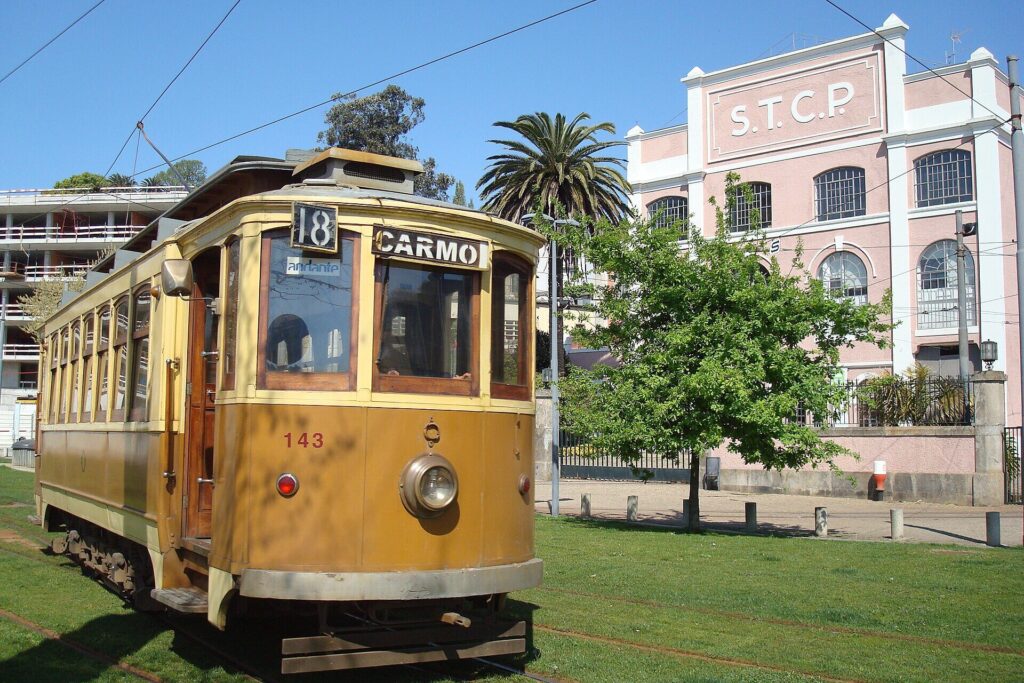
Tram Line 18 links the river with the upper town. It runs between Passeio Alegre in Foz and Carmo, sharing the riverside track with Line 1 as far as Massarelos, then climbing away from the Douro through the streets of the western centre to the square in front of the Carmo church. It is the steepest and most varied of the three tram routes.
For several years the line ran a shortened service while the city built the new metro Pink Line in the Cordoaria area. On 1 July 2026, Line 18 returned to its full route, reaching Carmo again for the first time in almost five years, which means the tram once more connects the riverside and Foz directly with the heart of the upper town.
Line 18 runs about every 30 minutes. It is a useful link between the tram museum at Massarelos and the centre, and a pleasant way to return from Foz if you would rather not go back the way you came. At Carmo you can change to Line 22 for a loop through the centre, or walk to the Clérigos Tower and Livraria Lello, a few minutes away.
Line 18 also serves as an easy way back from the tram museum to the centre without returning along the river. From Carmo, the Clérigos Tower, Livraria Lello and the Cordoaria garden are a few minutes on foot, and the Rua das Flores and São Bento station are a gentle walk downhill, so the end of the line puts you right in the middle of the sightseeing.
The climb from Massarelos gives a different view of Porto from the riverside ride, with glimpses down the steep side streets towards the Douro and the Gaia bank. Sit near the front if you can, as the tram's large windows make the most of the views as it winds uphill.
Porto Tram Line 22: The City Centre Loop Between Carmo and Batalha
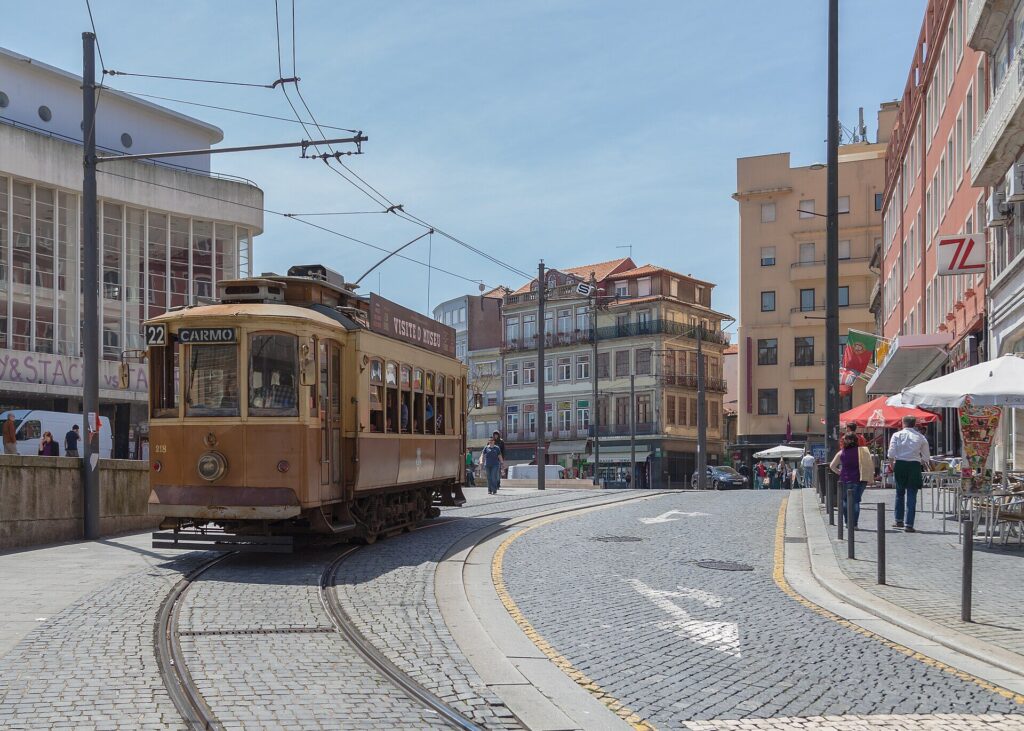
Tram Line 22 is a short circular route through the centre of Porto, running between Carmo and Batalha in one direction around the loop. It is the most convenient tram for visitors staying in the old town, because it passes close to the main shopping streets, the Aliados area and the Praça da Batalha, where the São João theatre and the tiled church of Santo Ildefonso stand.
The line was closed for more than four years during the metro construction works around Aliados, and it returned to service on 1 August 2026. It now runs every day with a tram every 30 minutes, the first leaving Carmo at 09:15, and the last trips in the early evening.
Porto Tram Line 22 at a Glance
- Route: a one-way loop between Carmo and Batalha through the city centre
- Frequency: every 30 minutes, every day
- First tram: 09:15 from Carmo
- Nearby sights: Clérigos Tower, Livraria Lello, Santo Ildefonso and the Batalha square
- Back in service: since 1 August 2026
Line 22 is the easiest tram ride to fit into a busy day, as the loop is short and the stops are close to the main sights. Ride it once for the experience, then use it to hop between Carmo and Batalha if your legs need a rest from Porto's hills.
Because it is a loop, Line 22 is also a good introduction to the city for a first afternoon, before the longer rides on Lines 1 and 18. Canto de Luz is about ten minutes on foot from the Carmo stop, so it is the simplest tram for our guests to reach.
Stay Near the Trams in Porto's Old Town
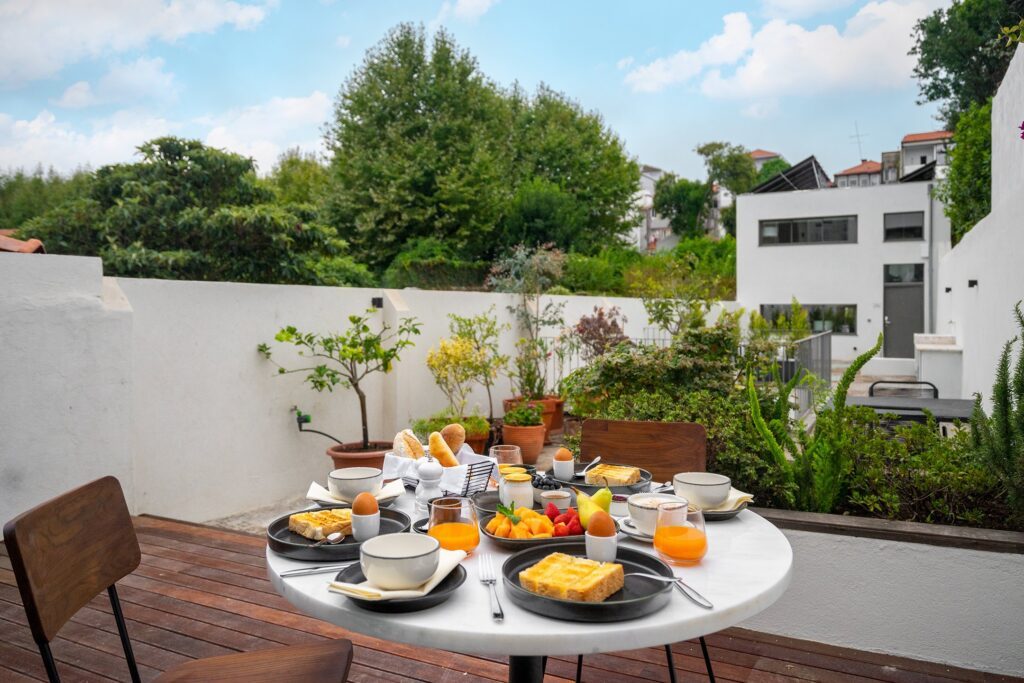
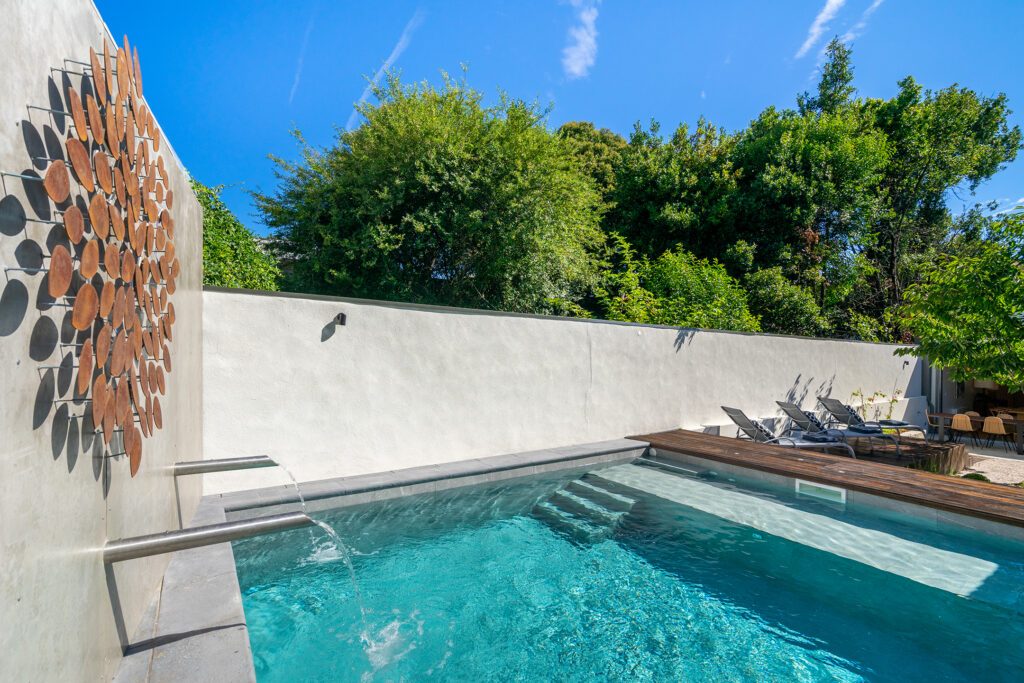
Canto de Luz is a restored Boutique Maison on Rua do Almada, about ten minutes from the Carmo tram stop and five minutes from Trindade metro, with a heated outdoor saltwater pool open all year and a homemade breakfast that changes every day. From €99 a night.


History of the Porto Tram: From Horse-Drawn Cars to Heritage Lines
Porto's tram story began in the 1870s with horse-drawn cars running on rails, known locally as americanos, which linked the centre with the riverside and the coast. In 1895 the city introduced electric trams, among the first on the Iberian Peninsula, and over the following decades the network grew to cover much of Porto and its neighbouring towns.
For much of the twentieth century the tram was the way most people crossed the city, and the routes along the river to Foz and up through the centre became part of daily life. From the 1950s onwards, buses gradually took over, and by the end of the century only a handful of routes remained.
Rather than lose the trams completely, the city kept the most scenic routes as heritage lines and restored a fleet of vintage tramcars to run them. The opening of the tram museum in the old Massarelos power station gave the collection a permanent home, and today the three lines carry visitors through the same streets the trams have served for more than a century.
The recent return of Lines 18 and 22 after the metro works around Aliados and Cordoaria completes the network once again, so in 2027 it is possible to ride all three historic routes in a single day, as Porto residents did a generation ago.
Porto Tram Tickets and Prices for 2027: Single, Two-Trip and Two-Day Tickets
Tickets for the Porto trams are bought on board from the driver, and they are separate from the normal metro and bus fares. A single journey costs about €6 for an adult, and a ticket for two journeys on the same day costs about €8, which is the better choice if you plan to ride Line 1 to Foz and back. Reduced fares are available for children.
A two-day tram ticket is also sold, covering unlimited travel on the heritage lines for 48 hours, with prices reported between about €12 and €15. It is only worth buying if you plan to ride several lines on more than one day, as most visitors take one or two tram rides during a stay.
The Andante Tour card is not valid on the historic trams, and the ordinary Andante card used on the metro and buses is generally not accepted either, so plan to buy a tram ticket. Bring cash in small notes and coins, as payment options on board can vary, and keep your ticket until you leave the tram.
Porto Tram Ticket Prices
| Ticket | Price | Notes |
|---|---|---|
| Single journey, adult | About €6 | Bought from the driver |
| Two journeys, same day | About €8 | Best value for Line 1 there and back |
| Two-day ticket | About €12 to €15 | Unlimited heritage tram travel for 48 hours |
| Child fare | Reduced | Ask the driver for the current price |
| Andante Tour card | Not valid | Buy a separate tram ticket |
Tram tickets are not transferable between people, so every rider needs their own ticket, including older children. If you are travelling as a family, compare the cost of single tickets with the two-day ticket before you board, and ask the driver about the current child fare, as reduced prices apply to younger passengers.
These are the fares charged in 2026, which apply into 2027 unless STCP announces a change. If you only want to reach Foz quickly and cheaply, the STCP 500 bus follows the same coast road from the centre, and an onboard bus ticket costs €2.50.
Riding the Porto Tram to Foz do Douro: The Best Tram Ride in Porto
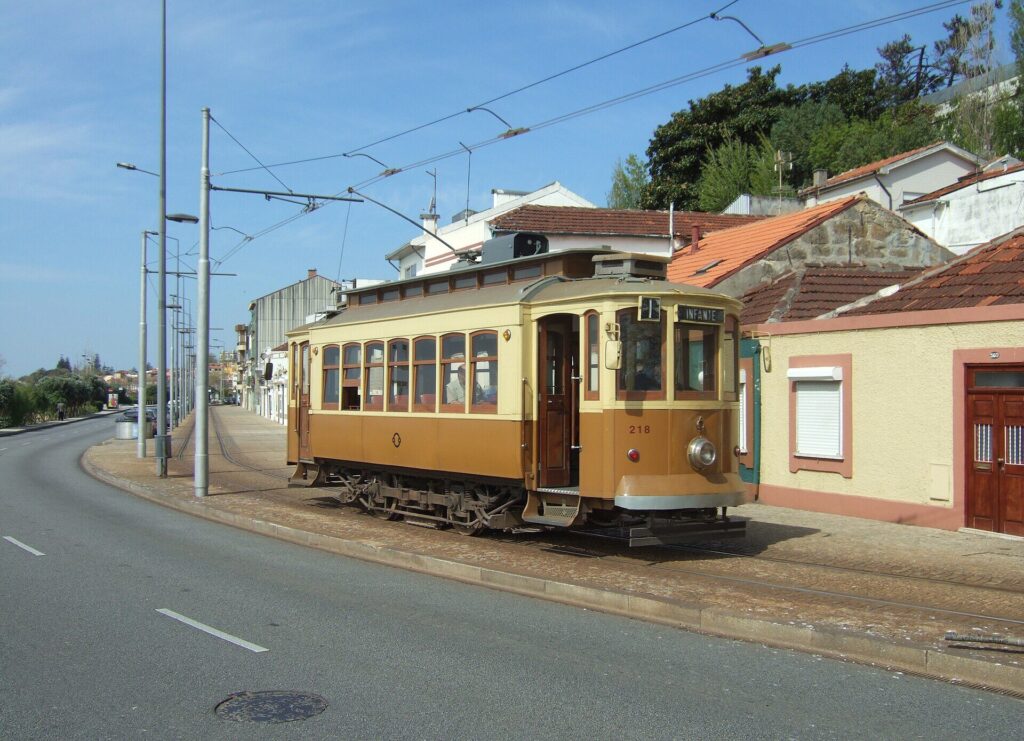
The ride to Foz on Line 1 is the tram journey most visitors remember. The river widens as the tram heads west, the houses become lower and brighter, and the smell of the sea arrives before you see the Atlantic. The last stretch runs along Rua das Sobreiras and past the Cantareira, where fishing boats still tie up below the old houses.
At the end of the line, Foz do Douro is Porto's seaside district, with a long promenade, rocky beaches, cafés and some of the best seafood restaurants in the city. Near the mouth of the river stands the sixteenth-century chapel and lighthouse of São Miguel-o-Anjo, one of the oldest lighthouses in Portugal.
From the Passeio Alegre stop you can walk along the promenade to the Felgueiras lighthouse at the river mouth, continue along the Avenida do Brasil to the Castelo do Queijo, or carry on to the beaches and seafood grills of Matosinhos. The 500 bus returns to the centre from the coast road if you walk further than planned.
What to See on the Tram Ride to Foz
- The Ribeira waterfront and the São Francisco church at Infante
- The Alfândega, the old customs house
- The Massarelos riverside and the tram museum
- The Arrábida bridge, crossing high above the Douro
- The fishermen's quarter of Cantareira and the river mouth
Go on a clear day, and time your return for the late afternoon so you can watch the sunset over the Atlantic before heading back. In winter the sun sets early, so plan to reach Foz by mid-afternoon to enjoy the walk along the sea.
If you want to make a full day of it, ride Line 1 to Foz in the morning, walk to Matosinhos for lunch, and come back on the metro from Matosinhos, which is a quicker way into the city centre than the coast road.
Jardim do Passeio Alegre: The Foz End of Porto Tram Lines 1 and 18
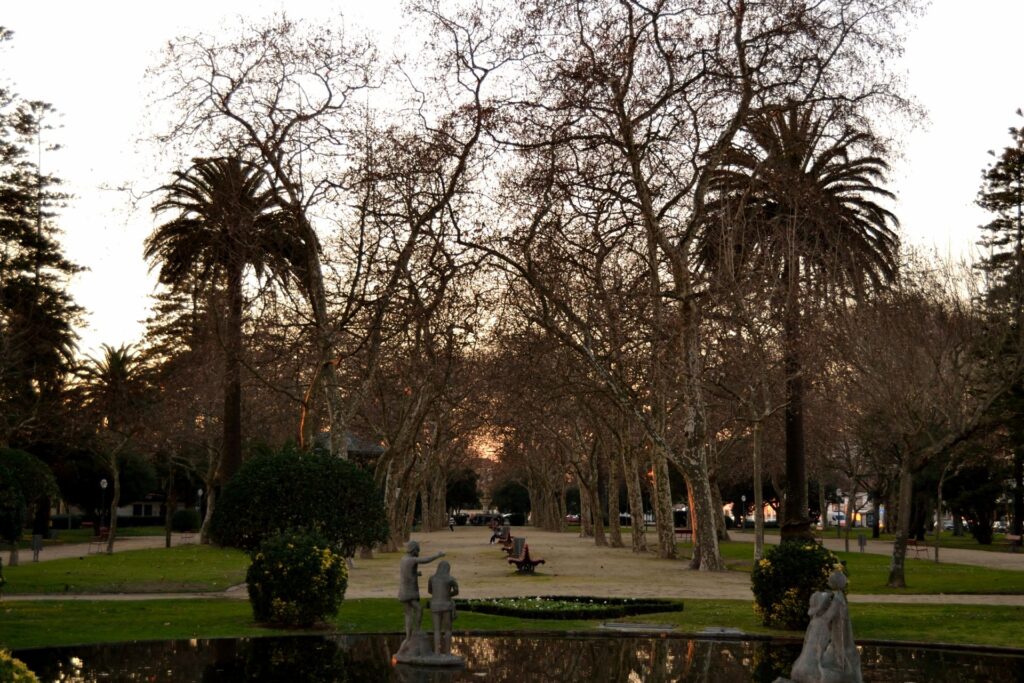
Both Line 1 and Line 18 finish at the Jardim do Passeio Alegre, a nineteenth-century garden on the riverfront in Foz do Douro. It is one of the loveliest gardens in Porto, laid out with tall palm trees, fountains, statues and shady paths, and it makes a peaceful place to sit after the tram ride before exploring the seafront.
The garden is popular with local families at weekends, with a small café and plenty of benches facing the river. In summer it hosts occasional markets and events, and in every season it is a good spot to watch the boats heading in and out of the Douro.
From the garden, the riverside promenade continues towards the sea, so you can walk to the river mouth in a few minutes. It is also a convenient place to start the ride back into the city, as the trams on both lines wait here before setting off.
If you are visiting Foz on a weekday, the garden and the promenade are quiet in the mornings, which makes them a calm counterpoint to the busy old town. On sunny weekends they fill with families, cyclists and walkers enjoying the sea air.
Porto Tram Museum: Visiting the Museu do Carro Eléctrico at Massarelos
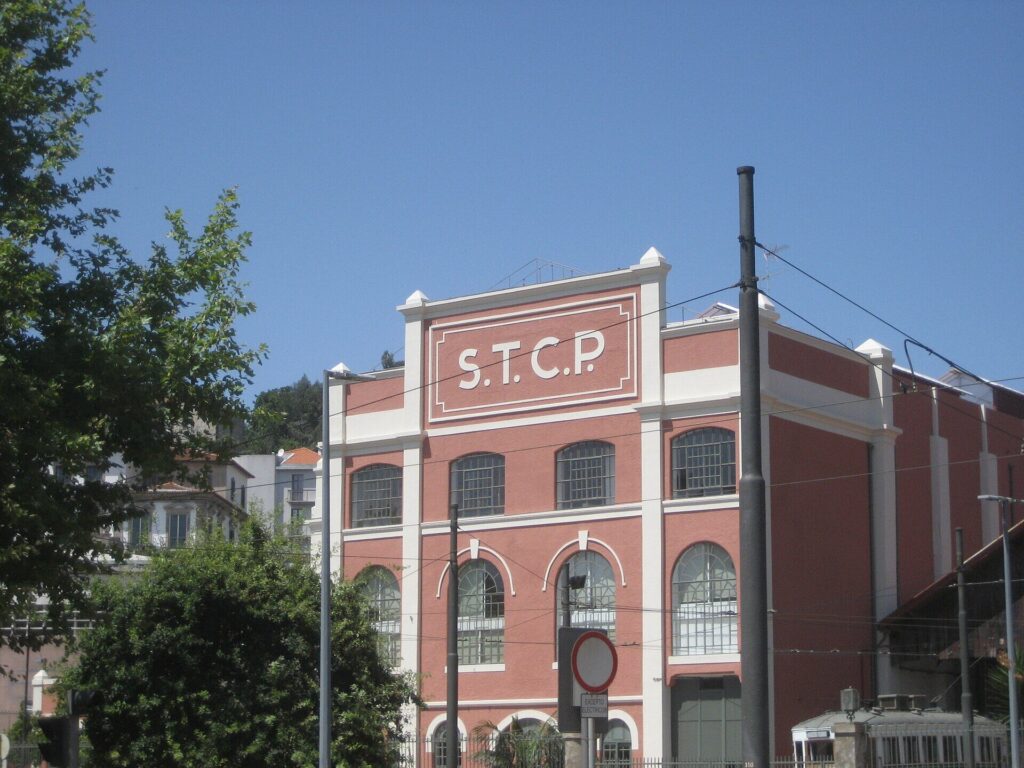
The Museu do Carro Eléctrico, the Porto tram museum, is housed in the former Massarelos power station that once supplied electricity to the city's trams. Inside, a collection of restored tramcars and historic vehicles tells the story of public transport in Porto, from the horse-drawn trams of the nineteenth century to the electric cars that still run today.
The museum stands on the riverside at Alameda Basílio Teles, right on the route of Lines 1 and 18, so it is easy to combine with a tram ride. The building itself is part of the attraction, with its high brick halls and the old machinery that once powered the network.
It is a rewarding visit for families, transport enthusiasts and anyone curious about how the city grew. Children enjoy climbing aboard some of the old tramcars, and the museum runs family activities and special evening events at various times of the year.
Porto Tram Museum Visitor Information
| Detail | Information |
|---|---|
| Address | Alameda Basílio Teles 51, Massarelos |
| Opening hours | Tuesday to Sunday 10:00 to 18:00, Monday 14:00 to 18:00 |
| Last admission | 30 minutes before closing |
| Adult ticket | €8 |
| Under 18 and seniors | €5 |
| Getting there | Tram Lines 1 and 18, Massarelos stop |
Allow about an hour for the museum, more if you are travelling with children who want to sit in every tramcar. It pairs well with a walk along the riverside to the Alfândega or a coffee at one of the cafés near the Crystal Palace Gardens, which are a short climb uphill from Massarelos.
The museum is closed on the afternoon of 24 December and all day on 25 December and 1 January. Prices and hours are those published by STCP, so check before your visit, particularly around public holidays.
A Porto Tram Day Out: Riding Tram Lines 1, 18 and 22 in One Day
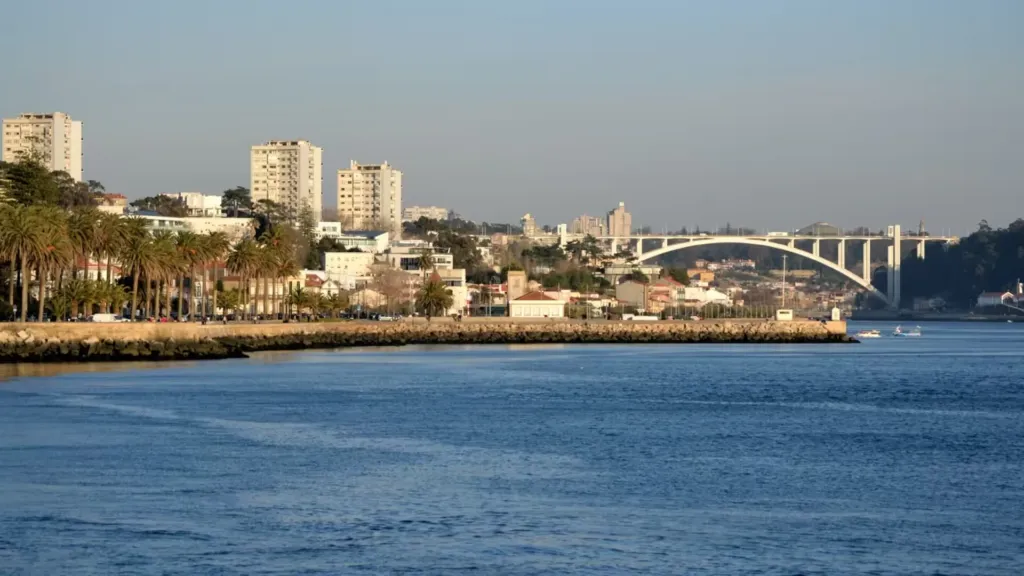
With all three lines running again, a full day on the Porto trams makes a relaxed way to see the city from the river to the upper town. Start in the morning at Infante, at the western end of the Ribeira, and take Line 1 along the Douro to Passeio Alegre, where you can walk along the seafront and have lunch in Foz.
In the afternoon, board Line 18 at Passeio Alegre, stop at Massarelos for the tram museum, and continue up to Carmo in the upper town. From Carmo, Line 22 loops through the centre past Batalha and back, and Canto de Luz is about ten minutes on foot from the Carmo stop, so the day ends close to home.
A two-trip ticket covers the two longer rides, and you can add a single for Line 22, or buy a two-day ticket if you plan to ride again the next day. Check the timetable before you set off, as the last trams leave in the early evening.
A One-Day Porto Tram Plan
| Time | Tram or stop | What to do |
|---|---|---|
| 10:00 | Line 1 from Infante | Ride along the Douro to Foz |
| 11:00 | Passeio Alegre and Foz | Walk the promenade and the river mouth |
| 13:00 | Foz do Douro | Seafood lunch by the sea |
| 15:00 | Line 18 to Massarelos | Visit the tram museum |
| 16:30 | Line 18 to Carmo | Climb to the upper town |
| 17:30 | Line 22 loop | Ride through the centre to Batalha and back |
Times are a suggestion and depend on the timetable and queues. On a short winter day, start a little earlier so that you reach Foz in good light, and leave the museum for a rainy morning if the weather turns.
Porto Tram vs Metro vs Bus: Which Is Best for Getting Around Porto?
The historic tram, the metro and the STCP buses each do a different job. The metro is the fastest and most practical way to cross the city, with six lines linking the airport, Trindade, the centre, Gaia and the coast. The buses cover the streets the metro does not reach, including the coast road to Foz on the 500, and they run more often than the trams.
The tram is slower and more expensive per journey, but it is the most memorable way to travel, especially along the river. Think of it as an attraction that also happens to take you somewhere, rather than everyday transport, and use the metro and bus for the rest of your trips.
For most visitors, the best combination is the metro for arriving from the airport and longer journeys, walking for the old town, one or two tram rides for the experience, and the 500 bus or the metro for the coast. The Funicular dos Guindais adds another historic way to climb from the Ribeira to the Batalha area.
Porto Tram, Metro and Bus Compared
| Option | Typical fare | Frequency | Best for |
|---|---|---|---|
| Historic tram | About €6 single | Every 20 to 30 minutes | The experience, the river to Foz |
| Metro | €1.40 for a central Z2 trip | Every few minutes | Airport, Trindade, Gaia, the coast |
| STCP bus | €2.50 onboard ticket | Frequent on main routes | Foz on the 500, areas without metro |
The tram is also the most atmospheric way to travel in the evening light, when the river glows and the old tramcars look their best against the city. If you are only in Porto for a short stay, use the metro and bus to save time during the day, and keep the tram for the late afternoon, when the ride itself becomes part of the sightseeing.
If you plan to use public transport a lot, buy a blue Andante card for the metro and buses, and pay for the tram separately. Our Porto itinerary for two, three and four days shows how to fit a tram ride into a short stay.
Tips for Riding the Porto Trams in 2027: Queues, Seats and Timing
The Porto trams are small, and in summer the most popular stops have queues, especially Infante on Line 1 from late morning. The trams hold only a few dozen passengers, and the driver will close the doors when the car is full, so you may need to wait for the next one. Arriving early in the day or in the late afternoon makes a big difference.
For the best views on Line 1, try to sit on the side of the tram facing the river, which you can usually do if you board at the start of the line. On Line 18, the seats near the front give the best views as the tram climbs through the city, and on Line 22 any seat works, as the loop is short.
The trams are vintage vehicles with steps at the doors and wooden seats, so they are not suitable for wheelchairs or large pushchairs. Small children love them, but hold on tight on the steeper sections, as the ride can be lively on the old tracks.
Porto Tram Tips
- Board Line 1 at Infante, the first stop, for the best seats
- Ride early or in the late afternoon to avoid the longest queues
- Carry cash for the ticket, and keep it until you leave the tram
- Use the 500 bus to return from Foz if the tram queue is long
- Check the STCP timetable for summer and winter hours
Above all, do not rush. The trams are part of the old rhythm of Porto, and the best way to enjoy them is to treat the ride as a slow tour of the city, with time to get off, walk and ride again.

A Note from Susan
“I always tell guests to save the tram to Foz for a sunny afternoon. Walk down to the Ribeira, take Line 1 from Infante with the river beside you all the way, and have a glass of wine by the sea before the sun goes down. Then come home on Line 18 or the bus, and you will have seen the whole of Porto in a single, lovely afternoon.”
Stay at Canto de Luz: A Boutique Hotel Near the Porto Trams
Canto de Luz is a restored Boutique Maison on Rua do Almada, opened with French hospitality in the old town. The Carmo tram stop, where Lines 18 and 22 meet, is about ten minutes on foot, Trindade metro is five minutes from the door, and the Ribeira and the start of Line 1 at Infante are an easy walk downhill, so every tram ride starts close to home.
After a day riding the trams and walking the seafront at Foz, the heated outdoor saltwater pool is open all year from 09:30 to 19:30, and breakfast the next morning is homemade and changes every day. Our team is happy to help with tram timetables and tickets, and Canto Cooking, our culinary school in the Maison, runs wine and port tastings for the evening.
 Google review
★★★★★
“We had a wine tasting there and it was a great experience. The wine was outstanding, the charcuterie board very nice and our guide had a great knowledge of the wine as well as the gastronomy in Porto. I can only recommend it!”
Renata Herbommez, Google review
Porto Trams: Frequently Asked Questions
Tap a question to see the answer.
How Much Does The Porto Tram Cost?
A single journey on the historic trams costs about €6 for an adult, and a ticket for two journeys on the same day costs about €8. A two-day ticket is also sold. Tickets are bought from the driver on board.
Where Do You Take Tram 1 In Porto?
Tram Line 1 starts at Infante, at the western end of the Ribeira near the São Francisco church, and runs along the Douro to Passeio Alegre in Foz do Douro.
Can You Use The Andante Card On The Porto Tram?
The Andante Tour card is not valid on the historic trams, and the ordinary Andante card is generally not accepted, so buy a separate tram ticket on board.
Which Porto Tram Route Is The Best?
Line 1 is the most scenic, running along the Douro from the Ribeira to the sea at Foz. Line 22 is the most convenient short loop through the city centre, and Line 18 climbs from the river to the upper town.
How Often Do The Porto Trams Run?
Line 1 runs about every 20 minutes, and Lines 18 and 22 run about every 30 minutes. Hours are longer in summer, so check the STCP timetable before you travel.
Are All Three Porto Tram Lines Running In 2027?
Yes. Line 18 returned to Carmo on 1 July 2026 and Line 22 returned on 1 August 2026, after the metro works, so Lines 1, 18 and 22 are all in service.
How Do You Pay For The Tram In Porto?
Pay the driver when you board. Bring cash in small notes and coins, as payment options on board can vary, and keep your ticket until you leave the tram.
Is The Porto Tram Museum Worth Visiting?
Yes, especially for families and transport lovers. The Museu do Carro Eléctrico at Massarelos displays restored tramcars in a former power station, with adult tickets at €8, and it is on the route of Lines 1 and 18.
Ride the Porto Trams from the Old Town
Canto de Luz is a restored Boutique Maison on Rua do Almada, a short walk from the Carmo tram stop and Trindade metro. Homemade breakfast every morning, a heated saltwater pool open all year, and a team that helps you plan every ride. From €99 a night.
Check AvailabilityImage credits, via Wikimedia Commons: AlfvanBeem (CC0), Carlos Luis M C da Cruz (public domain), Alain Gavillet (CC BY 2.0), Diego Delso (CC BY-SA 3.0), Vysotsky (CC BY-SA 4.0) and Carlos Pinto (CC BY-SA 2.0); featured image: Esther Westerveld (CC BY 2.0).