

At A Glance
Porto's most beautiful churches are Clérigos, the Sé Cathedral, São Francisco, Santa Clara, the Capela das Almas, Carmo and Carmelitas, Santo Ildefonso and Lapa, all within a short walk of the old town.
- The Clérigos tower and museum ticket costs about €10, with the church visited on the same route, and opens daily from 09:00 to 19:00.
- The nave of the Sé Cathedral is free, and the cloister with its azulejo panels costs about €4.
- The Capela das Almas, Santo Ildefonso and Lapa are free to enter outside services.
- São Francisco, with its walls of gilded carving and catacombs, is the one paid church most visitors say was worth every cent.
- Canto de Luz on Rua do Almada is about ten minutes on foot from Clérigos and the Carmo churches.
Porto is a city of churches. Within a twenty-minute walk of the old town you can see a Romanesque cathedral built like a fortress, Baroque churches lined with gold, chapels wrapped in blue and white tiles and a tower that has guided sailors into the Douro for more than two and a half centuries. Climbing the Clérigos Tower is the best-known visit, but the churches around it are just as rewarding and most cost little or nothing to enter.
The eight churches below cover the great periods of Porto's history, from the medieval cathedral to the tiled facades of the twentieth century, and together they make one of the best free days out in the city. If you want the background first, our guide to Porto's history explains how the city grew from the cathedral hill down to the river, and why so much of its wealth ended up in gold leaf and painted tiles.
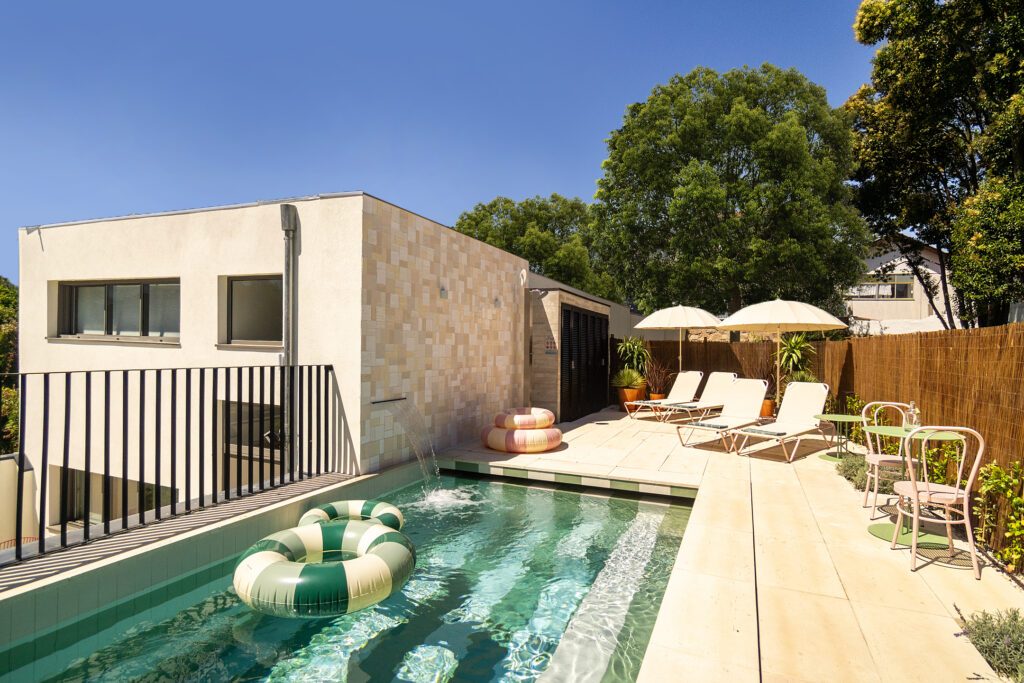
Visiting Porto's churches in 2027? Check dates at Canto de Luz, our Boutique Maison ten minutes on foot from Clérigos.
The Most Beautiful Churches in Porto: Tickets, Hours and What Makes Each Special
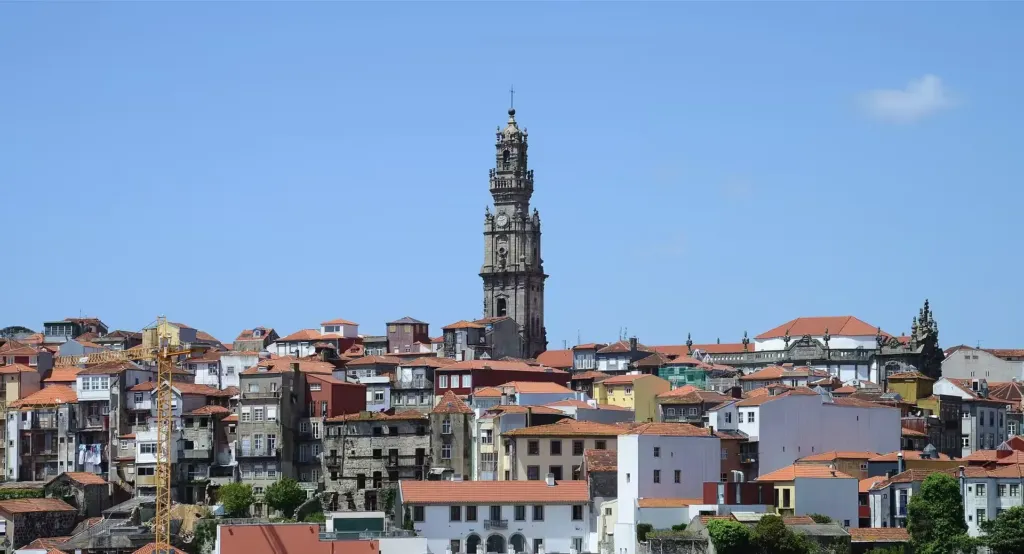
Porto's churches fall into three easy groups. The great monuments of the old town, Clérigos, the cathedral, São Francisco and Santa Clara, are where the city's history and its Baroque gold are concentrated. The tiled churches, the Capela das Almas, Carmo and Santo Ildefonso, are the ones you see on postcards, with whole walls of blue and white azulejos. And a short walk north, the Igreja da Lapa holds one of the most unusual relics in Portugal.
Most of these churches are free to enter, and the paid ones charge only a few euros. The exceptions are the Clérigos tower route and the Church of São Francisco, which are run as museums with full tickets, and the cathedral cloister, which has a small fee while the nave stays free. Because they are working churches, opening hours change around Mass, and many close for lunch.
The table below is the quickest way to plan your visits. Opening hours and prices are the most recent published figures, and the free churches in particular may close for services, weddings and funerals, so it is worth allowing a little flexibility in your day.
Porto Churches Compared
| Church | Entry | Typical hours | Best for |
|---|---|---|---|
| Clérigos Church and Tower | About €10, tower and museum | Daily 09:00 to 19:00 | The view and Nasoni's Baroque |
| Sé Cathedral | Nave free, cloister about €4 | 09:00 to 17:30 or 18:30 | History and the tiled cloister |
| São Francisco | About €9 | Daily from 09:00 | Gilded carving and catacombs |
| Santa Clara | Small fee | Weekdays, closed at lunch | Gold talha without the crowds |
| Capela das Almas | Free | Daily, around services | The famous tiled facade |
| Carmo and Carmelitas | Church free, paid route a few euros | Daily | Twin churches and the Casa Escondida |
| Santo Ildefonso | Free | Varies, around services | Jorge Colaço's tiles |
| Igreja da Lapa | Free | Varies, around services | The heart of King Pedro IV |
If you only have a morning, combine Clérigos, the Carmo churches and Livraria Lello, which sit within a few minutes of each other, then walk down to the cathedral and São Francisco in the afternoon. The tiled churches near Santa Catarina make a lovely early-evening walk, when the low sun lights up the blue and white walls.
Churches in Porto's Old Town: Clérigos, the Cathedral, São Francisco and Santa Clara
The four great churches of the old town tell the story of Porto from its medieval beginnings to the gold rush of the Baroque age. They are spread between the Clérigos hill and the river, so you can see them all in a day, and each one has a completely different character.
1. Clérigos Church and Tower
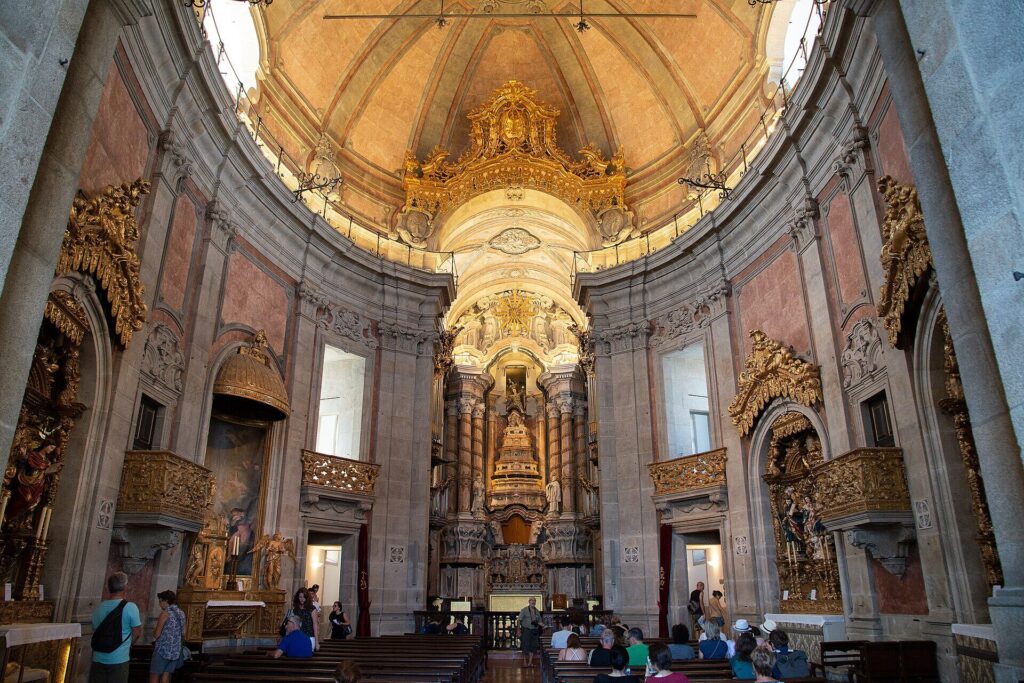
The Clérigos Church is the masterpiece of Nicolau Nasoni, the Italian architect who shaped Baroque Porto in the eighteenth century. The church has an unusual oval nave, rich pink and grey marble and a gilded altar, and behind it rises the Torre dos Clérigos, for centuries the tallest structure in Portugal and still the symbol of the city. Nasoni is buried in the church he designed.
Visitors climb about 240 steps to the top of the tower for one of the best views in Porto, across the rooftops to the cathedral, the river and the port lodges of Gaia. The ticket also covers the museum of religious art and the church, so the whole visit takes about an hour, a little longer on a clear day when the view is worth lingering over.
Clérigos Church and Tower at a Glance
- Where: Rua de São Filipe de Nery, in the centre near Livraria Lello
- Open: Daily, about 09:00 to 19:00, with later night openings in some seasons
- Ticket: About €10, students about €7, children under 10 free
- Highlight: The climb to the top and Nasoni's oval Baroque church
Book ahead or arrive early in summer, as the narrow staircase creates queues later in the day, and large backpacks are not allowed on the tower route. Our full guide to Clérigos Tower tickets and the climb covers the best times, and the tower is about ten minutes on foot from Canto de Luz.
2. Sé do Porto, the Cathedral
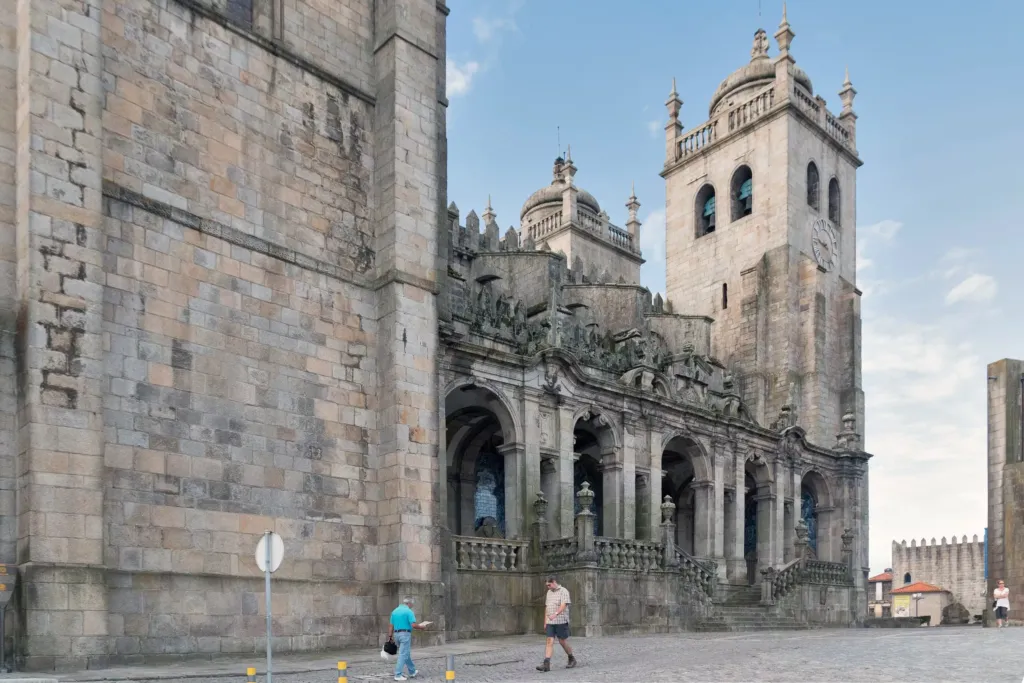
The Sé is Porto's cathedral and its oldest major monument, begun in the twelfth century on the hill where the city was born. From the outside it still looks like a fortress, with crenellated towers and heavy granite walls, but inside it holds centuries of additions: a Romanesque nave, a Gothic cloister, Baroque chapels with a silver altar and a loggia added by Nasoni on the side facing the river.
The highlight is the cloister, where the walls are covered with eighteenth-century blue and white azulejo panels showing biblical scenes and the life of the Virgin. Upstairs, the chapter house and terraces give views over the old town to the Dom Luís I bridge. The nave is free to visit, while the cloister, treasury and upper rooms are on a paid route.
The square in front of the cathedral, the Terreiro da Sé, is one of the best free viewpoints in the city, looking down over the roofs of the Ribeira. Our guide to Porto Cathedral has the history in more detail, and it pairs well with the walk down to São Francisco and the river.
Next to the cathedral stands the Paço Episcopal, the grand Baroque Bishop's Palace, whose long facade dominates the view of the cathedral hill from the river. It can be visited on its own ticket or combined with the cathedral, and its staircase and state rooms show how the bishops of Porto lived when the city grew rich on trade and wine. Allow an hour for the cathedral and its cloister, and a little more if you add the palace.
3. Church of São Francisco
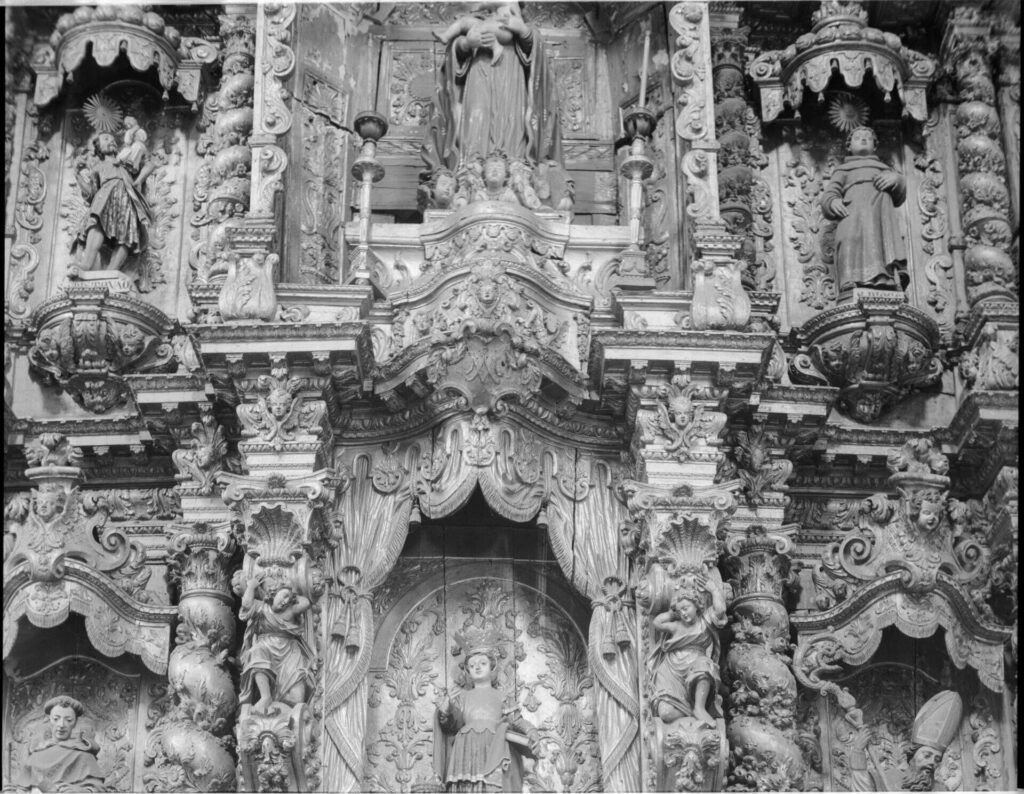
The Church of São Francisco looks plain and Gothic from the outside, but inside almost every surface is covered with gilded carved wood, known in Portugal as talha dourada. Columns, altars and ceilings are wrapped in gold leaf, cherubs and vines, and the famous Tree of Jesse altarpiece traces the family of Christ in carved and painted figures. It is one of the most extraordinary Baroque interiors in Europe.
The church is no longer used for regular worship and is run as a museum, with a ticket that includes the museum of the Franciscan order and the catacombs beneath the church. In the catacombs, members of the order and wealthy Porto families were buried, and an ossuary can be seen through a glass floor, a memorable if slightly eerie end to the visit.
Church of São Francisco at a Glance
- Where: Rua do Infante D. Henrique, next to the Palácio da Bolsa
- Open: Daily from 09:00, closing between about 17:30 and 20:00 by season
- Ticket: About €9 for adults, with reductions for students and children
- Highlight: The gilded interior, the Tree of Jesse and the catacombs
Photography is not allowed inside the church itself, so take your time and enjoy it with your own eyes. It sits beside the Palácio da Bolsa and a few minutes from the river, so it fits naturally into a day exploring the Ribeira and the waterfront.
4. Church of Santa Clara
The Church of Santa Clara is the hidden treasure of Porto's old town. It stands beside the old Fernandine city walls above the river, and its simple exterior gives no hint of the interior, which is considered one of the largest and finest examples of gilded carved woodwork in Portugal. Every wall and ceiling glows with gold, and because it is far less visited than São Francisco, you may have it almost to yourself.
The church was carefully restored and reopened to the public in 2021, and the gold now shines as it did when the convent of the Poor Clares was at its height. It is a working church with limited opening hours, generally on weekday mornings and afternoons with a break for lunch, and on Saturday mornings, and a small fee helps fund its upkeep.
Combine it with the nearby Funicular dos Guindais, which runs down to the river from close by, or with the cathedral, a short walk away. Check the opening hours before you go, as they are shorter than most churches in this list, and step inside quietly, as services and prayer continue here.
Stay in Porto's Old Town, Close to the Churches
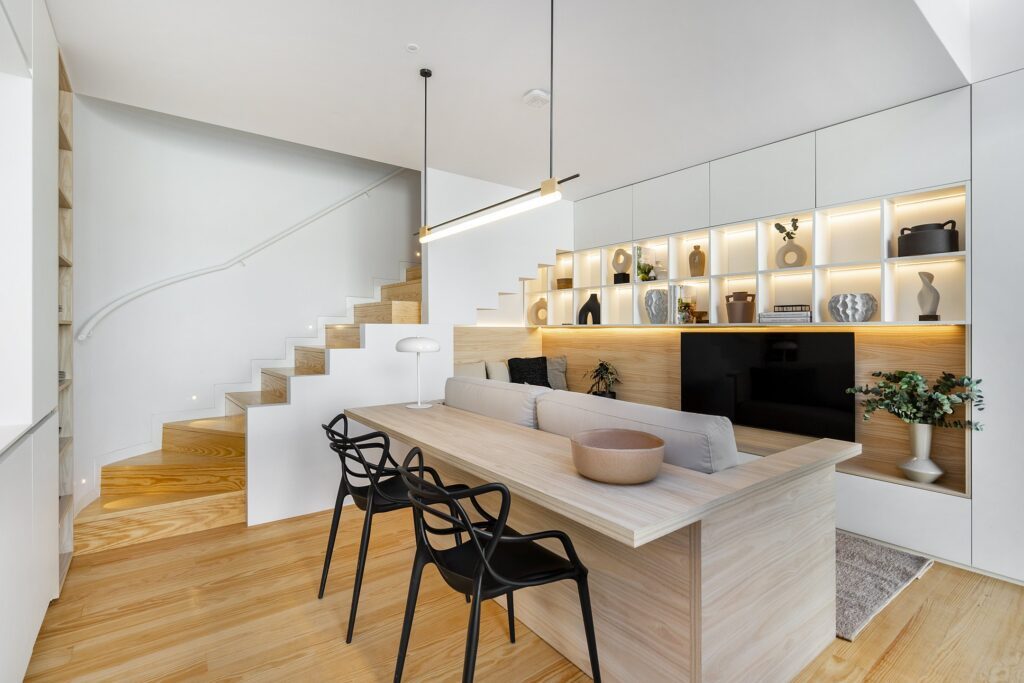
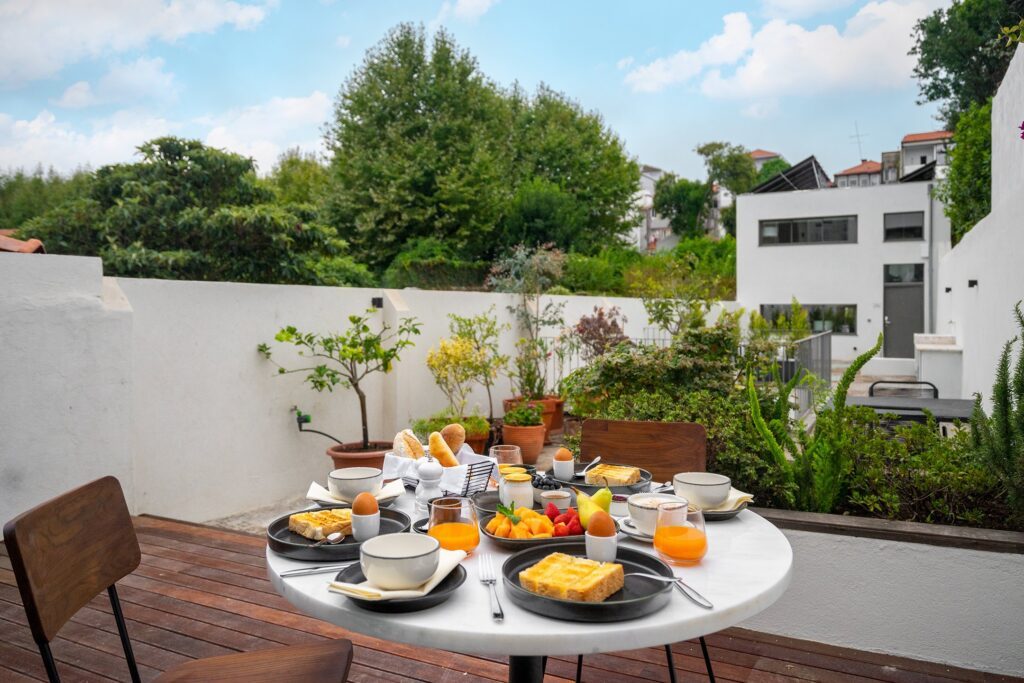
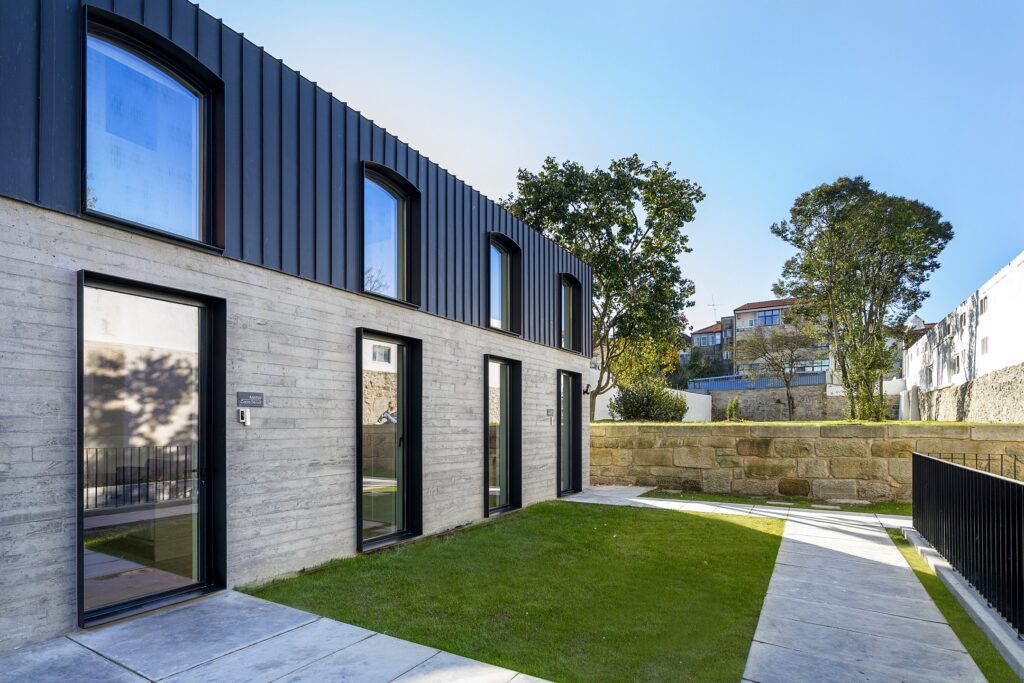
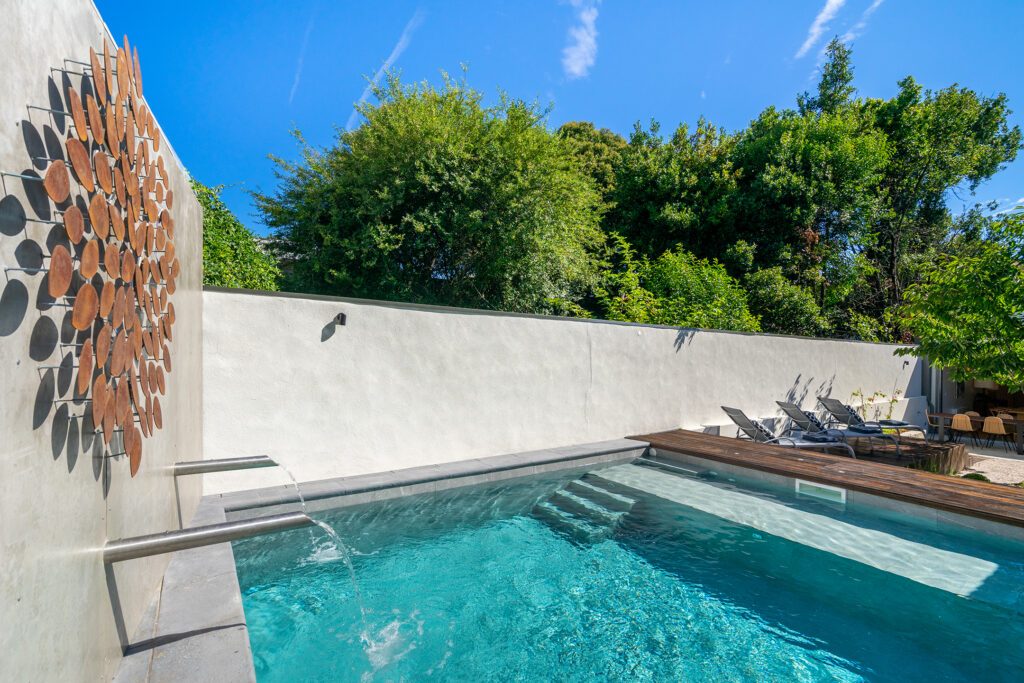
Canto de Luz is a restored Boutique Maison on Rua do Almada, ten minutes on foot from Clérigos and the Carmo churches, with a heated outdoor saltwater pool open all year and a homemade breakfast that changes every day. From €99 a night.
Porto's Tiled Churches: Capela das Almas, Carmo and Santo Ildefonso
The blue and white tiled churches are Porto's most photographed buildings, and three of the best are a short walk from each other. Their azulejo facades were added in the early twentieth century, when Portuguese tile painting enjoyed a great revival, and the panels tell stories of saints and religious orders in thousands of hand-painted tiles.
Azulejos have decorated Portuguese buildings for five centuries, and the blue and white style became the national favourite in the eighteenth century. The tiles are practical as well as beautiful, protecting the walls from Porto's rain and Atlantic damp, which is why they cover churches, stations and houses all over the city. Seeing the three tiled churches together is the easiest way to understand how central this art form is to Porto's identity.
5. Capela das Almas
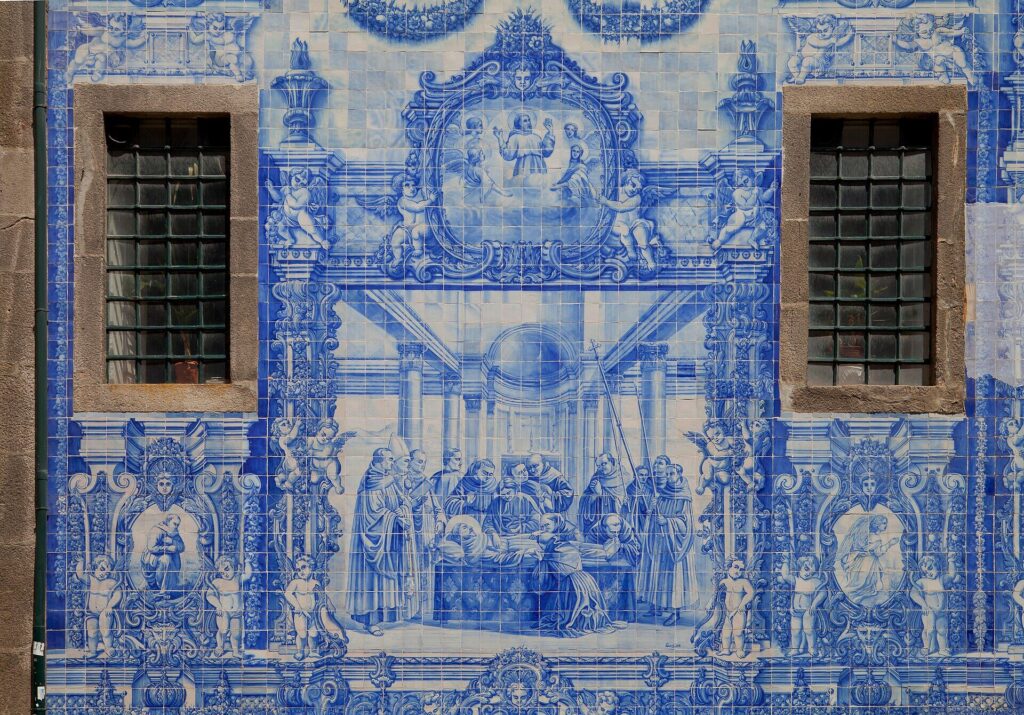
The Capela das Almas, the Chapel of Souls, stands at the corner of Rua de Santa Catarina and Rua de Fernandes Tomás, and its outside walls are covered with almost 16,000 blue and white tiles. The panels were painted by Eduardo Leite and added in 1929, and they show scenes from the lives of Saint Francis of Assisi and Saint Catherine, framed by elaborate decorative borders.
It is one of the most photographed buildings in Porto, and the best photos come from the opposite pavement on Rua de Fernandes Tomás, where you can fit the whole side wall into the frame. The chapel is free to enter, and the interior is calm and simple compared with the decoration outside, with a few more tiles and a small altar.
It sits at the top of Rua de Santa Catarina, Porto's main shopping street, so it combines easily with a morning in the shops and the Bolhão market. Our guide to shopping in Porto covers the street, and the chapel is a short walk from Canto de Luz.
6. Carmo and Carmelitas Churches
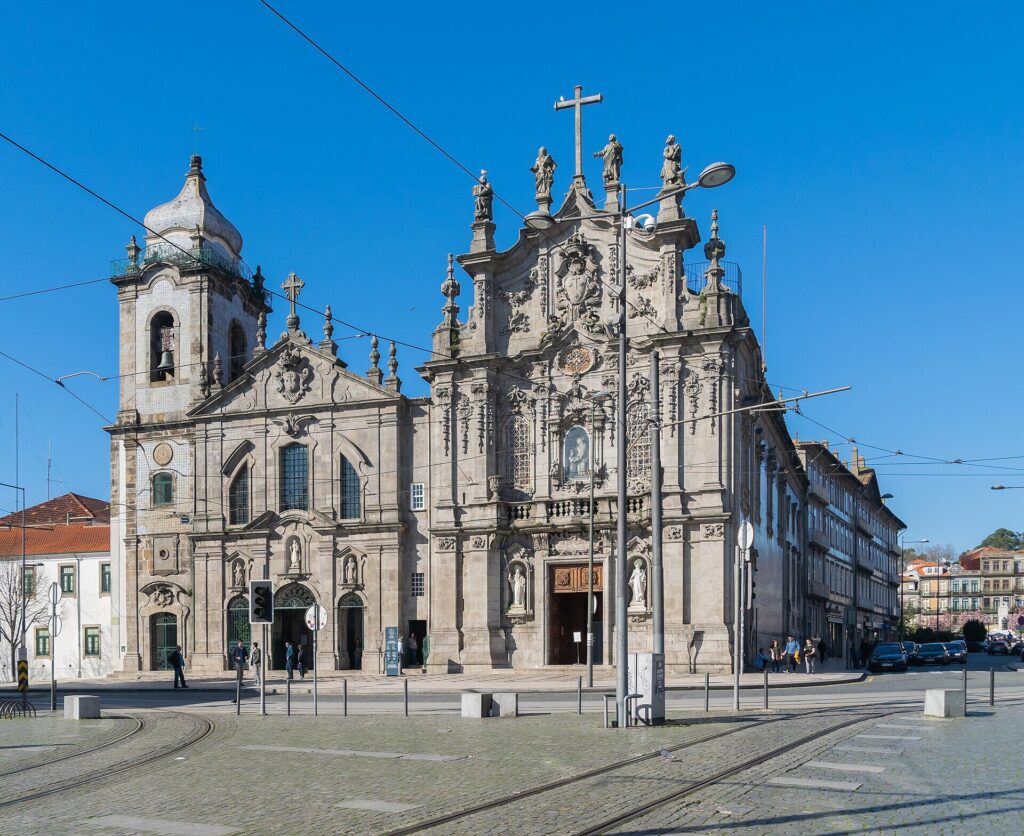
The Carmo and Carmelitas churches stand side by side near Praça de Gomes Teixeira, so close that they look like a single building. The Carmelitas church on the left is the older of the two, and the Igreja do Carmo on the right is famous for its side wall, covered with a huge azulejo panel showing the founding of the Carmelite order, one of the largest tiled walls in the city.
Between the two churches is the Casa Escondida, the hidden house, a sliver of a building only about a metre wide that was built so the two churches would not share a wall, keeping the nuns of one and the monks of the other apart. A paid route of a few euros lets you see the hidden house, the catacombs and the upper rooms of the Carmo church.
Carmo and Carmelitas at a Glance
- Where: Praça de Carlos Alberto and Praça de Gomes Teixeira, near Livraria Lello
- Open: Daily, with hours changing around services
- Ticket: Church entry free, paid route a few euros
- Highlight: The tiled side wall and the Casa Escondida
The churches are a minute from Livraria Lello, the Clérigos Tower and the Fonte dos Leões fountain, so they are easy to fit into a morning in the centre. The tiled wall faces east along Rua do Carmo, so it looks its best in morning light, and our guide to the best places to see azulejo tiles in Porto lists other tiled walls nearby.
7. Church of Santo Ildefonso
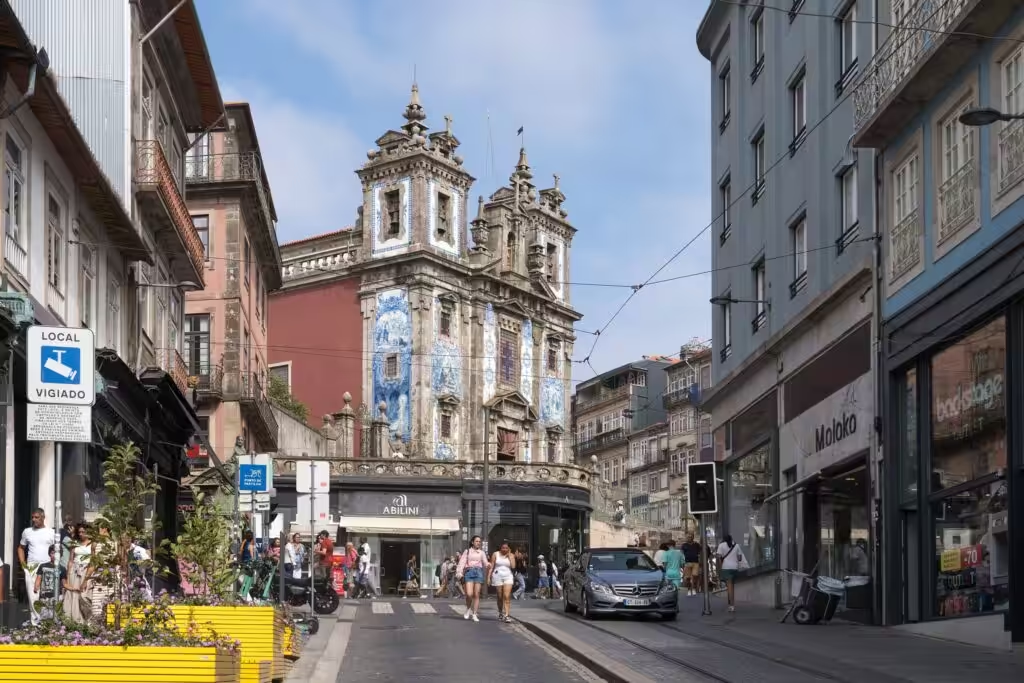
The Church of Santo Ildefonso stands at the top of Rua de Santa Catarina on Praça da Batalha, with twin bell towers and a facade covered with about 11,000 blue and white tiles. The tiles were designed by Jorge Colaço, the same artist who created the famous panels inside São Bento station, and were added in 1932, showing scenes from the life of Saint Ildefonso and the Gospels.
The church itself dates from the eighteenth century, and inside you will find gilded altars and a peaceful atmosphere away from the busy square outside. Entry is free, and the steps in front of the church are a popular spot to sit and watch the trams and the crowds on Santa Catarina below.
Combine it with the Capela das Almas, a few minutes along Rua de Santa Catarina, and the Batalha square with its theatres and cafés. Opening hours change from day to day around services, so if you want to see the interior, visit in the late morning or check the parish notices before you go.
Igreja da Lapa and Other Porto Churches Beyond the Centre
A short walk north of the centre, and scattered around the old town, a few more churches reward the curious visitor. They are quieter than the famous names, and each has a story of its own.
8. Igreja da Lapa
The Igreja da Lapa stands on Largo da Lapa, about fifteen minutes on foot north of Trindade, and it holds one of the most unusual relics in Portugal: the heart of King Pedro IV. The king left his heart to Porto in gratitude for the city's support during the Liberal Wars, and it has been kept in the church since 1835, in a small shrine near the main altar.
The church is a large neoclassical building with a grand interior and a very large pipe organ, and next to it lies the Cemitério da Lapa, a romantic nineteenth-century cemetery with elaborate tombs and chapels. Entry to the church is free, and opening hours vary around Mass, so it is best visited in the late morning.
The Lapa is off the main tourist route, which is part of its charm. Walk up from Canto de Luz or Trindade, visit the church and the cemetery, and return through the quiet residential streets of the Lapa district, a side of Porto that most visitors never see.
The Lapa cemetery is worth a few extra minutes. It is one of the oldest public cemeteries in Porto, and its family chapels, carved angels and cast-iron railings make it an atmospheric place for a quiet walk. Many of Porto's merchant families and writers are buried here, and the paths under the trees feel a world away from the busy streets of the centre.
More Porto Churches Worth a Look
- Igreja dos Congregados, beside São Bento station, with a tiled facade by Jorge Colaço
- Igreja da Misericórdia on Rua das Flores, with its carved Baroque facade and museum
- The Mosteiro da Serra do Pilar in Gaia, across the Dom Luís I bridge, for one of the best views of Porto
These shorter visits fit easily between the larger churches. The Congregados and the São Bento station hall are a minute apart, and the Misericórdia sits on Rua das Flores, on the way from São Bento down to São Francisco and the river.
A Walking Route Through Porto's Churches in 2027
The churches of central Porto fit neatly into a one-day walk that runs mostly downhill, from the tiled churches at the top of the city to the river. Start in the morning at Santo Ildefonso and the Capela das Almas, then walk to Clérigos, the Carmo churches and Livraria Lello, before heading down to the cathedral, São Francisco and the Ribeira in the afternoon.
The route covers about three kilometres on foot, with plenty of stops, and the steepest climbs are in the opposite direction, so following it in this order saves your legs. Allow a full day if you want to go inside every church and climb the Clérigos Tower, or half a day if you are happy to admire the tiled facades from outside.
Leave the Igreja da Lapa for another morning, as it sits north of the centre, and finish your church day with a drink by the river or a visit to the best museums and galleries in Porto if the weather turns. Our Porto itinerary for two, three and four days shows how the churches fit into a longer stay.
A One-Day Porto Church Walk
- Step 1: Santo Ildefonso on Praça da Batalha, in the morning
- Step 2: Capela das Almas on Rua de Santa Catarina
- Step 3: Clérigos Church and Tower, ideally before the late-morning queues
- Step 4: Carmo and Carmelitas churches and the Casa Escondida
- Step 5: Lunch, then the Sé Cathedral and its cloister
- Step 6: The Church of São Francisco, then the Ribeira for the evening
If you are visiting in December, the walk takes on a special atmosphere, with nativity scenes in the churches and lights along Santa Catarina and Aliados. Our guide to the Porto Christmas markets adds the seasonal stops along the same route.
Visiting Porto's Churches: Opening Hours, Tickets, Dress Code and Mass Times
Most of Porto's churches open in the morning, close for a few hours at lunchtime and reopen in the afternoon, while the museum churches, Clérigos and São Francisco, stay open all day. Hours change around Mass, weddings and funerals, and on major religious holidays, so the late morning and mid-afternoon are usually the safest times to visit.
Dress modestly, with shoulders covered, and keep your voice low, as these are working churches where people come to pray. Photography is welcome in most, but not inside São Francisco, and flash is best avoided everywhere. During Mass, visitors are asked not to walk around the church, so wait for the service to finish.
Tickets are needed only for Clérigos, São Francisco, the cathedral cloister, the Carmo route and Santa Clara. Children usually enter free or at a reduced price, and students with an ID card often receive a discount, so bring your card if you have one.
Porto Church Visiting Tips
| Tip | Why it helps |
|---|---|
| Visit late morning or mid-afternoon | Avoids early Mass and the lunchtime closures |
| Cover your shoulders | Expected in all working churches |
| Bring small change | For the paid routes and donation boxes |
| No photos in São Francisco | Photography is not allowed in the church |
| Check before Sundays and holidays | Services take priority over visits |
If you are travelling with children, the Clérigos climb and the São Francisco catacombs are usually the highlights, while the tiled facades are perfect for a quick stop between other sights. Most churches are a short walk apart, so you can mix them with cafés, shops and viewpoints as you go.
Religious festivals add another layer to a visit. During Holy Week, processions leave several of the old town churches, and in June the city celebrates São João, its patron saint festival, when the streets around the churches fill with music, lanterns and grilled sardines. At Christmas, many churches display elaborate nativity scenes, and some hold concerts, so check local listings if you are visiting in December 2027.
If you plan to visit several paid sights in one or two days, compare the cost of individual tickets with any combined city pass on offer at the time, as the passes change and do not always include the churches. For most visitors, paying for Clérigos and São Francisco separately and enjoying the free churches costs less than a pass.

A Note from Susan
“I tell guests to save one late afternoon for the tiled churches near Santa Catarina. Walk up to Santo Ildefonso, then along to the Capela das Almas when the sun is low and the blue tiles turn almost silver. It costs nothing, it takes an hour, and it is the Porto that people remember long after they go home.”
Stay Near Porto's Most Beautiful Churches at Canto de Luz
Canto de Luz is a restored Boutique Maison on Rua do Almada, opened with French hospitality in the heart of the old town. Clérigos, the Carmo churches and Livraria Lello are about ten minutes away on foot, the Capela das Almas and Santo Ildefonso are a short walk across the centre, and the Igreja da Lapa is within an easy walk to the north.
After a day of churches and climbs, our heated outdoor saltwater pool is open all year from 09:30 to 19:30, and breakfast the next morning is homemade and changes every day. Our team is happy to suggest the best times to visit each church and to book tickets for Clérigos before you arrive.
 Google review
★★★★★
“Perfect, especially the staff.”
Javier Montoro Zulueta (translated from Spanish)
Churches in Porto: Frequently Asked Questions
Tap a question to see the answer.
What Is The Most Beautiful Church In Porto?
The Church of São Francisco is often called the most beautiful, with an interior covered in gilded carved wood. The Capela das Almas is the most photographed for its tiled facade, and the Clérigos Church is the city's Baroque landmark.
What Is The Main Church In Porto?
The Sé do Porto, the cathedral, is the main church of the city. It dates from the twelfth century and stands on the hill where Porto began, with a free nave and a paid cloister covered with azulejo panels.
Which Porto Churches Are Worth Visiting In 2027?
The best churches to visit in Porto in 2027 are Clérigos and its tower, the Sé Cathedral, São Francisco, Santa Clara, the Capela das Almas, the Carmo and Carmelitas churches, Santo Ildefonso and the Igreja da Lapa.
What Are The Twin Churches In Porto?
The twin churches are the Carmelitas and Carmo churches, which stand side by side near Livraria Lello. They are separated by the Casa Escondida, a hidden house about a metre wide, and the Carmo church has a huge tiled side wall.
Is It Free To Visit Churches In Porto?
Many are free, including the Capela das Almas, Santo Ildefonso, the Igreja da Lapa and the cathedral nave. Clérigos, São Francisco, the cathedral cloister, Santa Clara and the Carmo route charge a fee.
How Much Does It Cost To Visit The Church Of São Francisco?
Entry to the Church of São Francisco costs about €9 for adults, with reductions for students and children. The ticket includes the museum and the catacombs.
How Many Tiles Are On The Capela Das Almas?
The Capela das Almas is covered with almost 16,000 blue and white azulejo tiles, painted by Eduardo Leite and added in 1929, showing scenes from the lives of Saint Francis and Saint Catherine.
What Should I Wear To Visit Churches In Porto?
Dress modestly, with shoulders covered, as most are working churches. Keep quiet during services and avoid walking around while Mass is taking place.
Explore Porto's Churches from the Old Town
Canto de Luz is a restored Boutique Maison on Rua do Almada, ten minutes on foot from Clérigos and the Carmo churches. Homemade breakfast every morning, a heated saltwater pool open all year, and a team that helps you plan your visits. From €99 a night.
Check AvailabilityImage credits, via Wikimedia Commons: Peter K Burian (CC BY-SA 4.0), Biblioteca de Arte, Fundação Calouste Gulbenkian (no known restrictions), Diego Delso (CC BY-SA 3.0) and Krzysztof Golik (CC BY-SA 4.0).